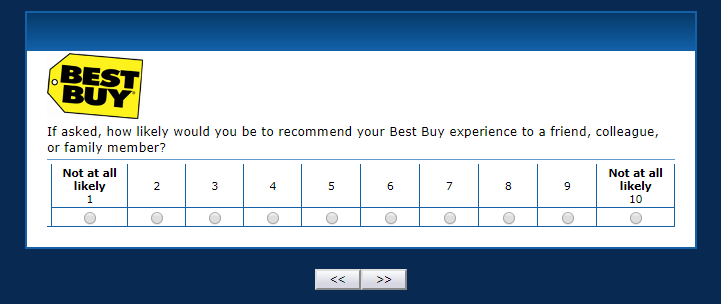
"So is this the email equivalent of one man's trash is another man's treasure?" writes Allan.
David C. wrote, "I received this automated bill notification from Canada Post's online inbox service saying that, possibly, nobody wants me to pay them."
"Well, to be fair, the did say that using Mail Chimp makes it easy to send email," Jacob R. wrote.
"Here at M*******t we take your privacy seriously!" James writes.
Kurt W. writes, "It's funny because email clients usually crap out before filtering 9 quintillion messages."
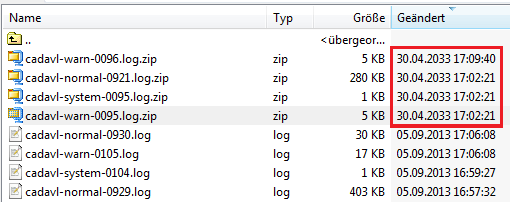
"I'm a little bit suspicious about these files I found in our logging directory," wrote Michael G., "Sadly, I am not working for the National Lottery..."
[Advertisement] Universal Package Manager - ProGet easily integrates with your favorite Continuous Integration and Build Tools, acting as the central hub to all your essential components. Learn more today!
To read the full article, please visit The Daily WTF
We generally don’t do news roundups when yet another major company gets hacked and leaks personally compromising data about the public. We know that “big company hacked” isn’t news, it’s a Tuesday. So the Equifax hack didn’t seem like something worth spending any time to write an article about.
But then new things kept coming out. It got worse. And worse. And worse. It’s like if a dumpster caught on fire, but then the fire itself also caught on fire.
If you have been living under a rock, Equifax, a company that spies on the financial behavior of Americans and sells that intelligence to banks, credit card companies, and anyone else who’s paying, was hacked, and the culprits have everything they need to steal the identities of 143 million people.
That’s bad, but everything else about it is worse. First, the executives kept the breach secret for months, and then sold stock just before the news went public. That is a move so utterly brazen that they might as well be a drunk guy with no shirt shouting, “Come at me bro! Come at me!” They’re daring the Securities and Exchange Commission to do something about it, and are confident that they won’t be punished.
Speaking of punishment, the CEO retired, and he’ll be crying about this over the $90M he’s collecting this year. The CIO and CSO went first, of course. They probably won’t be getting huge compensation packages, but I’m sure they’ll land cushy gigs somewhere.
Said CSO, by the way, had no real qualifications to be a Chief Security Officer. Her background is in music composition.
Now, I want to be really clear here: I don’t think her college degree is actually relevant. What you did in college isn’t nearly as important as your work experience, which is the real problem- she doesn’t really have that, either. She’s spent her entire career in “executive” roles, and while she was a CSO before going to Equifax, that was at First Data. Funny thing about First Data: up until 2013 (about when she left), it was in a death spiral that was fixed after some serious house-cleaning and restructuring- like clearing out dead-weight in their C-level.
Don't worry about the poor shareholders, though. Remember Wells Fargo, the bank that fraudulently signed up lots of people for accounts? They list Equifax as an investment opportunity that's ready to "outperform".
That’s the Peter Principle and corporate douchebaggerry in action, and it certainly starts getting me angry, but this site isn’t about class struggle- it’s about IT. And it’s on the IT side where the real WTFs come into play.
Equifax spies on you and sells the results. The US government put a mild restriction on this behavior: they can spy on you, but you have the right to demand that they stop selling the results. This is a “credit freeze”, and every credit reporting agency- every business like Equifax- has to do this. They get to charge you money for the privilege, but they have to do it.
To “secure” this transaction, when you freeze your credit, the credit reporting companies give you a “password” which you can use in the future to unfreeze it (because if you want a new credit card, you have to let Equifax share your data again). Some agencies give you a random string. Some let you choose your own password. Equifax used the timestamp on your request.
Even if they didn’t apply the fix, Apache provided workarounds- some of which were as simple as, “Turn off the REST plugin if you’re not using it,” or “if you ARE using it, turn off the XML part”. It’s certainly not the easiest fix, especially if you’re on a much older version of Struts, but you could even patch just the REST plugin, cutting down on the total work.
Now, if you’re paying attention, you might be saying to yourself, “Hey, Remy, didn’t you say that they were breached (initially) in March? The month the bug was discovered? Isn’t it kinda reasonable that they wouldn’t have rolled out the fix in time?” Yes, that would be reasonable: if a flaw exposed in March was exploited within a few days or even weeks of the flaw being discovered, I could understand that. But remember, the breach that actually got announced was in July- they were breached in March, and they still didn’t apply the patch. This honestly makes it worse.
Even then, I’d argue that we’re giving them too much of the benefit of the doubt. I’m going to posit that they simply don’t care. Not only did they not apply the patch, they likely had no intention of applying the patch, because they assumed they’d get away with it. Remember: you are the product, not the customer. If they accidentally cut the sheep while shearing, it doesn’t matter: they’ve still got the wool.
As an example of “they clearly don’t care”, let’s turn our attention to their Argentinian Branch, where their employee database was protected by the passwordadmin/admin. Yes, with that super-secure password, you could log in from anywhere in the world and see the users usernames, employee IDs, and personal details. Of course, their passwords were obscured as “******”… in the rendered DOM. A simple “View Source” would reveal the plaintext of their passwords, in true “hunter2” fashion.
Don’t worry, it gets dumber. Along with the breach announcement, Equifax took to social media to direct users to a site where, upon entering their SSN, it would tell them whether or not they were compromised. That was the promise, but the reality was that it was little better than flipping a coin. Worse, the site was a thinly veiled ad for their "identity protection" service, and the agreement contained an arbitration clause which kept you from suing them.
That is, at least if you went to the right site. Setting aside the wisdom of encouraging users to put confidential information into random websites, for weeks Equifax’s social media team was directing people to the wrong site! In fact, it was directing them to a site which warns about the dangers of putting confidential information into random websites.
And all of that, all of that, isn’t the biggest WTF. The biggest WTF is the Social Security Number, which was never meant to be used as a private identifier, but as it’s the only unique data about every American, it substitutes for a national identification system even when it’s clearly ill-suited to the task.
I’ll leave you with the CGP Grey video on the subject:
[Advertisement] Release! is a light card game about software and the people who make it. Play with 2-5 people, or up to 10 with two copies - only $9.95 shipped!
To read the full article, please visit The Daily WTF
“Throw typed exceptions,” is generically good advice in a strongly typed language, like Java. It shouldn’t be followed thoughtlessly, but it’s a good rule of thumb. Some people may need a little more on the point, though.
Alexander L sends us this code:
  public boolean isCheckStarted (final String nr) throws CommonException {
    final BigDecimal sqlCheckStarted = executeDBBigDecimalQueryFirstResult (
      Query.CHECKSTARTED_BY_NR,
      nr);

    CommonException commonException = new CommonException ("DB Query fail to get 'CheckStarted'");
    int checkStarted = -1;
    checkStarted = Integer.parseInt (Utility.bigDecimalToString (sqlCheckStarted));
    if (checkStarted == 1 || checkStarted == 0) {
      return checkStarted == 1 ? true : false;
    } else {
      throw commonException;
    }
  }
At a glance, it looks ugly, but the scope of its badness doesn’t really set in until Alexander fills some of the surrounding blanks:
CommonException is a generic class for failures in talking to the database
It is almost never caught directly anywhere in the code, and the rare places that do wrap it in a RuntimeException
executeDBBigDecimalQueryFirstResult throws a CommonException if the query failed.
It’s also important to note that Java captures the stack trace when an exception is created, not when it’s thrown, and this method is called from pretty deep in the stack, so that’s expensive.
And all of that isn’t even the worst. The “CheckStarted” field is apparently stored in the database as a Decimal type, or at least is fetched from the database that way. Its only legal values are “0” and “1”, making this a good bit of overkill. To round out the type madness, we convert it to a string only to parse it back into an int.
And that’s still not the worst.
This line: return checkStarted == 1 ? true : false; That’s the kind of line that just sets my skin crawling. It bugs me even more than using an if statement, because the author apparently knew enough to know about ternaries, but not enough to know about boolean expressions.
[Advertisement] Release! is a light card game about software and the people who make it. Play with 2-5 people, or up to 10 with two copies - only $9.95 shipped!
To read the full article, please visit The Daily WTF
Chris M works for a “solutions provider”. Mostly, this means taking an off-the-shelf product from Microsoft or Oracle or SAP and customizing it to fit a client’s specific needs. Since many of these clients have in-house developers, the handover usually involves training those developers up on the care and maintenance of the system.
Then, a year or two later, the client comes back, complaining about the system. “It’s broken,” or “performance is terrible,” or “we need a new feature”. Chris then goes back out to their office, and starts taking a look at what has happened to the code in his absence.
It’s things like this:
    var getAdjustType = Xbp.Page.getAttribute("cw_adjustmenttype").getText;

    var reasonCodeControl = Xbp.Page.getControl("cw_reasoncode");
    if (getAdjustType === "Short-pay/Applying Credit" || getAdjustType === "Refund/Return (Credit)") {
        var i;
        var options = (Xbp.Page.getAttribute("cw_reasoncode").getOptions());
        reasonCodeControl

        for (i = 0; i < options.length; i++) {
            if (i <= 4) {
                reasonCodeControl.removeOption(options[i].value);

            }
            if (i >= 5) {
                reasonCodeControl.clearOptions();

            }
            if (i >= 5) {
                reasonCodeControl.addOption(options[5]);
                reasonCodeControl.addOption(options[6]);
                reasonCodeControl.addOption(options[7]);
                reasonCodeControl.addOption(options[8]);
                reasonCodeControl.addOption(options[9]);
                reasonCodeControl.addOption(options[10]);
                reasonCodeControl.addOption(options[11]);
                reasonCodeControl.addOption(options[12]);
                reasonCodeControl.addOption(options[13]);
                reasonCodeControl.addOption(options[14]);
                reasonCodeControl.addOption(options[15]);
                reasonCodeControl.addOption(options[16]);
                reasonCodeControl.addOption(options[17]);
                reasonCodeControl.addOption(options[18]);
                reasonCodeControl.addOption(options[19]);
                reasonCodeControl.addOption(options[20]);
                reasonCodeControl.addOption(options[21]);


            }
        }
    }
    else {
        var options = (Xbp.Page.getAttribute("cw_reasoncode").getOptions());
        for (var i = 0; i < options.length; i++) {
            if (i >= 4) {
                reasonCodeControl.removeOption(options[i].value);

            }
            if (i <= 4) {
                reasonCodeControl.clearOptions();

            }
            if (i <= 4) {
                reasonCodeControl.addOption(options[0]);
                reasonCodeControl.addOption(options[1]);
                reasonCodeControl.addOption(options[2]);
                reasonCodeControl.addOption(options[3]);
                reasonCodeControl.addOption(options[4]);

            }
        }
    }
There are patterns and there are anti-patterns, like there is matter and anti-matter. An anti-pattern would be the “switch loop”, where you have different conditional branches that execute depending on how many times the loop has run. And then there’s this, which is superficially similar to the “switch loop” anti-pattern, but confused. Twisted, with conditional branches that execute on the same condition. It may have once been an anti-pattern, but now it’s turned into a strange pattern, and like strange matter threatens to turn everything it touches into more of itself.
[Advertisement] Release! is a light card game about software and the people who make it. Play with 2-5 people, or up to 10 with two copies - only $9.95 shipped!
To read the full article, please visit The Daily WTF
James was getting anxious to land a job that would put his newly-minted Computer Science degree to use. Six months had come to pass since he graduated and being a barista barely paid the bills. Living in a small town didn't afford him many local opportunities, so when he saw a developer job posting for an upstart telecom company, he decided to give it a shot.
We do everything in-house! the posting for CallCom emphasized, piquing James' interest. He hoped that meant there would be a small in-house development team that built their systems from the ground up. Surely he could learn the ropes from them before become a key contributor. He filled out the online application and happily clicked Submit.
Not 15 minutes later, his phone rang with a number he didn't recognize. Usually he just ignored those calls but he decided to answer. "Hi, is James available?" a nasally female voice asked, almost sounding disinterested. "This is Janine with CallCom, you applied for the developer position."
Caught off guard by the suddenness of their response, James wasn't quite ready for a phone screening. "Oh, yeah, of course I did! Just now. I am very interested."
"Great. Louis, the owner, would like to meet with you," Janine informed him.
"Ok, sure. I'm pretty open, I usually work in the evenings so I can make most days work," he replied, checking his calendar.
"Can you be here in an hour?" she asked. James managed to hide the fact he was freaking out about how to make it in time while assuring her he could be.
He arrived at the address Janine provided after a dangerous mid-drive shave. He felt unprepared but eager to rock the interview. The front door of their suite gave way to a lobby that seemed more like a walk-in closet. Janine was sitting behind a small desk reading a trashy tabloid and barely looked up to greet him. "Louis will see you now," she motioned toward a door behind the desk and went back to reading barely plausible celebrity rumors.
James stepped through the door into what could have been a walk-in closet for the first walk-in closet. A portly, sweaty man presumed to be Louis jumped up to greet him. "John! Glad you could make it on short notice. Have a seat!"
"Actually, it's James..." he corrected Louis, while also forgiving the mixup. "Nice to meet you. I was eager to get here to learn about this opportunity."
"Well James, you were right to apply! We are a fast growing company here at CallCom and I need eager young talent like you to really drive it home!" Louis was clearly excited about his company, growing sweatier by the minute.
"That sounds good to me! I may not have any real-world experience yet, but I assure you that I am eager to learn from your more senior members," James replied, trying to sell his potential.
Louis let out a hefty chuckle at James' mention of senior members. "Oh you mean stubborn old developers who are set in their ways? You won't be finding those around here! I believe in fresh young minds like yours, unmolded and ready to take the world by storm."
"I see..." James said, growing uneasy. "I suppose then I could at least learn how your code is structured from your junior developers? The ones who do your in-house development?"
Louis wiped his glistening brow with his suit coat before making the big revelation. "There are no other developers, James. It would just be you, building our fantastic new computer system from scratch! I have all the confidence in the world that you are the man for the job!"
James sat for a moment and pondered what he had just heard. "I'm sorry but I don't feel comfortable with that arrangement, Louis. I thought that by saying you do everything in-house, that implied there was already a development team."
"What? Oh, heavens no! In-house development means we let you work from home. Surely you can tell we don't have much office space here. So that's what it means. In. House. Got it?
James quickly thanked Louis for his time and left the interconnected series of closets. In a way, James was glad for the experience. It motivated him to move out of his one horse town to a bigger city where he eventually found employment with a real in-house dev team.
[Advertisement] Otter, ProGet, BuildMaster – robust, powerful, scalable, and reliable additions to your existing DevOps toolchain.
To read the full article, please visit The Daily WTF
I’ve had to write a few domain-specific-languages in the past. As per Remy’s Law of Requirements Gathering, it’s been mostly because the users needed an Excel-like formula language. The danger of DSLs, of course, is that they’re often YAGNI in the extreme, or at least a sign that you don’t really need
XML, coupled with schemas, is a tool for building data-focused DSLs. If you have some complex structure, you can convert each of its features into an XML attribute. For example, if you had a grammar that looked something like this:
The Source specification obeys the following syntax

source = ( Feature1+Feature2+... ":" ) ? steps

Feature1 = "local" | "global"

Feature2 ="real" | "virtual" | "ComponentType.all"

Feature3 ="self" | "ancestors" | "descendants" | "Hierarchy.all"

Feature4 = "first" | "last" | "DayAllocation.all"

If features are specified, the order of features as given above has strictly to be followed.

steps = oneOrMoreNameSteps | zeroOrMoreNameSteps | componentSteps

oneOrMoreNameSteps = nameStep ( "." nameStep ) *

zeroOrMoreNameSteps = ( nameStep "." ) *

nameStep = "#" name

name is a string of characters from "A"-"Z", "a"-"z", "0"-"9", "-" and "_". No umlauts allowed, one character is minimum.

componentSteps is a list of valid values, see below.

Valid 'componentSteps' are:

- GlobalValue
- Product
- Product.Brand
- Product.Accommodation
- Product.Accommodation.SellingAccom
- Product.Accommodation.SellingAccom.Board
- Product.Accommodation.SellingAccom.Unit
- Product.Accommodation.SellingAccom.Unit.SellingUnit
- Product.OnewayFlight
- Product.OnewayFlight.BookingClass
- Product.ReturnFlight
- Product.ReturnFlight.BookingClass
- Product.ReturnFlight.Inbound
- Product.ReturnFlight.Outbound
- Product.Addon

- Product.Addon.Service
- Product.Addon.ServiceFeature

In addition to that all subsequent steps from the paths above are permitted, that is 'Board',
'Accommodation.SellingAccom' or 'SellingAccom.Unit.SellingUnit'.
'Accommodation.Unit' in the contrary is not permitted, as here some intermediate steps are missing.
You could turn that grammar into an XML document by converting syntax elements to attributes and elements. You could do that, but Stella’s predecessor did not do that. That of course, would have been work, and they may have had to put some thought on how to relate their homebrew grammar to XSD rules, so instead they created an XML schema rule for SourceAttributeType that verifies that the data in the field is valid according to the grammar… using regular expressions. 1,310 characters of regular expressions.
There’s a bug in that regex that Stella needed to fix. As she put it: “Every time you evaluate it a few little kitties die because you shouldn’t use kitties to polish your car. I’m so, so sorry, little kitties…”
The full, unexcerpted code is below, so… at least it has documentation. In two languages!
<xs:simpleType name="SourceAttributeType">
                <xs:annotation>
                        <xs:documentation xml:lang="de">
                Die Source Angabe folgt folgender Syntax

                        source = ( Eigenschaft1+Eigenschaft2+... ":" ) ? steps

                        Eigenschaft1 = "local" | "global"

                        Eigenschaft2 ="real" | "virtual" | "ComponentType.all"

                        Eigenschaft3 ="self" | "ancestors" | "descendants" | "Hierarchy.all"

                        Eigenschaft4 = "first" | "last" | "DayAllocation.all"

                        Falls Eigenschaften angegeben werden muss zwingend die oben angegebene Reihenfolge der Eigenschaften eingehalten werden.

                        steps = oneOrMoreNameSteps | zeroOrMoreNameSteps | componentSteps

                        oneOrMoreNameSteps = nameStep ( "." nameStep ) *

                        zeroOrMoreNameSteps = ( nameStep "." ) *

                        nameStep = "#" name

                        name ist eine Folge von Zeichen aus der Menge "A"-"Z", "a"-"z", "0"-"9", "-" und "_". Keine Umlaute. Mindestens ein Zeichen

                        componentSteps ist eine Liste gültiger Werte, siehe im folgenden

                Gültige 'componentSteps' sind zunächst:

                        - GlobalValue
                        - Product
                        - Product.Brand
                        - Product.Accommodation
                        - Product.Accommodation.SellingAccom
                        - Product.Accommodation.SellingAccom.Board
                        - Product.Accommodation.SellingAccom.Unit
                        - Product.Accommodation.SellingAccom.Unit.SellingUnit
                        - Product.OnewayFlight
                        - Product.OnewayFlight.BookingClass
                        - Product.ReturnFlight
                        - Product.ReturnFlight.BookingClass
                        - Product.ReturnFlight.Inbound
                        - Product.ReturnFlight.Outbound
                        - Product.Addon
                        - Product.Addon.Service
                        - Product.Addon.ServiceFeature

                Desweiteren sind alle Unterschrittfolgen aus obigen Pfaden erlaubt, also 'Board', 'Accommodation.SellingAccom' oder 'SellingAccom.Unit.SellingUnit'.
                'Accommodation.Unit' hingegen ist nicht erlaubt, da in diesem Fall einige Zwischenschritte fehlen.

                                </xs:documentation>
                        <xs:documentation xml:lang="en">
                                The Source specification obeys the following syntax

                                source = ( Feature1+Feature2+... ":" ) ? steps

                                Feature1 = "local" | "global"

                                Feature2 ="real" | "virtual" | "ComponentType.all"

                                Feature3 ="self" | "ancestors" | "descendants" | "Hierarchy.all"

                                Feature4 = "first" | "last" | "DayAllocation.all"

                                If features are specified, the order of features as given above has strictly to be followed.

                                steps = oneOrMoreNameSteps | zeroOrMoreNameSteps | componentSteps

                                oneOrMoreNameSteps = nameStep ( "." nameStep ) *

                                zeroOrMoreNameSteps = ( nameStep "." ) *

                                nameStep = "#" name

                                name is a string of characters from "A"-"Z", "a"-"z", "0"-"9", "-" and "_". No umlauts allowed, one character is minimum.

                                componentSteps is a list of valid values, see below.

                                Valid 'componentSteps' are:

                                - GlobalValue
                                - Product
                                - Product.Brand
                                - Product.Accommodation
                                - Product.Accommodation.SellingAccom
                                - Product.Accommodation.SellingAccom.Board
                                - Product.Accommodation.SellingAccom.Unit
                                - Product.Accommodation.SellingAccom.Unit.SellingUnit
                                - Product.OnewayFlight
                                - Product.OnewayFlight.BookingClass
                                - Product.ReturnFlight
                                - Product.ReturnFlight.BookingClass
                                - Product.ReturnFlight.Inbound
                                - Product.ReturnFlight.Outbound
                                - Product.Addon
                                - Product.Addon.Service
                                - Product.Addon.ServiceFeature

                                In addition to that all subsequent steps from the paths above are permitted, that is 'Board', 'Accommodation.SellingAccom' or 'SellingAccom.Unit.SellingUnit'.
                                'Accommodation.Unit' in the contrary is not permitted, as here some intermediate steps are missing.

                        </xs:documentation>
                </xs:annotation>
                <xs:union>
                        <xs:simpleType>
                                <xs:restriction base="xs:string">
                                        <xs:pattern value="(((Scope.)?(global|local|current)\+?)?((((ComponentType.)?(real|virtual))|ComponentType.all)\+?)?((((Hierarchy.)?(self|ancestors|descendants))|Hierarchy.all)\+?)?((((DayAllocation.)?(first|last))|DayAllocation.all)\+?)?:)?(#[A-Za-z0-9\-_]+(\.(#[A-Za-z0-9\-_]+))*|(#[A-Za-z0-9\-_]+\.)*(ThisComponent|GlobalValue|Product|Product\.Brand|Product\.Accommodation|Product\.Accommodation\.SellingAccom|Product\.Accommodation\.SellingAccom\.Board|Product\.Accommodation\.SellingAccom\.Unit|Product\.Accommodation\.SellingAccom\.Unit\.SellingUnit|Product\.OnewayFlight|Product\.OnewayFlight\.BookingClass|Product\.ReturnFlight|Product\.ReturnFlight\.BookingClass|Product\.ReturnFlight\.Inbound|Product\.ReturnFlight\.Outbound|Product\.Addon|Product\.Addon\.Service|Product\.Addon\.ServiceFeature|Brand|Accommodation|Accommodation\.SellingAccom|Accommodation\.SellingAccom\.Board|Accommodation\.SellingAccom\.Unit|Accommodation\.SellingAccom\.Unit\.SellingUnit|OnewayFlight|OnewayFlight\.BookingClass|ReturnFlight|ReturnFlight\.BookingClass|ReturnFlight\.Inbound|ReturnFlight\.Outbound|Addon|Addon\.Service|Addon\.ServiceFeature|SellingAccom|SellingAccom\.Board|SellingAccom\.Unit|SellingAccom\.Unit\.SellingUnit|BookingClass|Inbound|Outbound|Service|ServiceFeature|Board|Unit|Unit\.SellingUnit|SellingUnit))"/>
                                </xs:restriction>
                        </xs:simpleType>
                </xs:union>
</xs:simpleType>
[Advertisement] Release! is a light card game about software and the people who make it. Play with 2-5 people, or up to 10 with two copies - only $9.95 shipped!
To read the full article, please visit The Daily WTF
"So there's this developer who is the end-all, be-all try-hard of the year. We call him Shoe. He's the kind of over-engineering idiot that should never be allowed near code. And, to boot, he's super controlling."
Sometimes, you'll be talking to a friend, or reading a submission, and they'll launch into a story of some crappy thing that happened to them. You expect to sympathize. You expect to agree, to tell them how much the other guy sucks. But as the tale unfolds, something starts to feel amiss.
They start telling you about the guy's stand-up desk, how it makes him such a loser, such a nerd. And you laugh nervously, recalling the article you read just the other day about the health benefits of stand-up desks. But sure, they're pretty nerdy. Why not?
"But then, get this. So we gave Shoe the task to minify a bunch of JavaScript files, right?"
You start to feel relieved. Surely this is more fertile ground. There's a ton of bad ways to minify and concatenate files on the server-side, to save bandwidth on the way out. Is this a premature optimization story? A story of an idiot writing code that just doesn't work? An over-engineered monstrosity?
"So he fires up gulp.js and gets to work."
Probably over-engineered. Gulp.js lets you write arbitrary JavaScript to do your processing. It has the advantage of being the same language as the code being minified, so you don't have to switch contexts when reading it, but the disadvantage of being JavaScript and thus impossible to read.
"He asks how to concat JavaScript, and the room tells him the right answer: find javascripts/ -name '*.js' -exec cat {} \; > main.js"
Wait, what? You blink. Surely that's not how Gulp.js is meant to work. Just piping out to shell commands? But you've never used it. Maybe that's the right answer; you don't know. So you nod along, making a sympathetic noise.
"Of course, this moron can't just take the advice. Shoe has to understand how it works. So he starts googling on the Internet, and when he doesn't find a better answer, he starts writing a shell script he can commit to the repo for his 'jay es minifications.'"
That nagging feeling is growing stronger. But maybe the punchline is good. There's gotta be a payoff here, right?
"This guy, right? Get this: he discovers that most people install gulp via npm.js. So he starts shrieking, 'This is a dependency of mah script!' and adds node.js and npm installation to the shell script!"
Stronger and stronger the feeling grows, refusing to be shut out. You swallow nervously, looking for an excuse to flee the conversation.
"We told him, just put it in the damn readme and move on! Don't install anything on anyone else's machines! But he doesn't like this solution, either, so he finally just echoes out in the shell script, requires npm. Can you believe it? What a n00b!"
That's it? That's the punchline? That's why your friend has worked himself into a lather, foaming and frothing at the mouth? Try as you might to justify it, the facts are inescapable: your friend is TRWTF.
[Advertisement] Manage IT infrastructure as code across all environments with Puppet. Puppet Enterprise now offers more control and insight, with role-based access control, activity logging and all-new Puppet Apps. Start your free trial today!
To read the full article, please visit The Daily WTF
Just last week, I was teaching a group of back-end developers how to use Angular to develop front ends. One question that came up, which did suprise me a bit, was how to deal with race conditions and concurrency in JavaScript.
I’m glad they asked, because it’s a good question that never occurred to me. The JavaScript runtime, of course, is single-threaded. You might use Web Workers to get multiple threads, but they use an Actor model, so there’s no shared state, and thus no need for any sort of locking.
Chris R’s team did have a need for locking. Specifically, their .NET backend needed to run a long-ish bulk operation against their SqlServer. It would be triggered by an HTTP request from the client-side, AJAX-style, but only one user should be able to run it at a time.
Someone, for some reason, decided that they would implement this lock in front-end JavaScript, since that’s where the AJAX calls were coming from..
var myMutex = true; //global (as in page wide, global) variable
function onClickHandler(element) {
    if (myMutex == true) {
        myMutex = false;
        // snip...
        if ($(element).hasClass("addButton") == true) {
            $(element).removeClass("addButton").addClass("removeButton");
            // snip...
            $.get(url).done(function (r) {
                // snip... this code is almost identical to the branch below
                setTimeout("myMutex = true;", 100);
            });
        } else {
            if ($(element).hasClass("removeButton") == true) {
                $(element).removeClass("removeButton").addClass("addButton");
                // snip...
                $.get(url).done(function (r) {
                    // snip... this code is almost identical to the branch above
                    setTimeout("myMutex = true;", 100);
                });
            }
        }
    }
}
You may be shocked to learn that this solution didn’t work, and the developer responsible never actually tested it with multiple users. Obviously, a client side variable isn’t going to work as a back-end lock. Honestly, I’m not certain that’s the worst thing about this code.
First, they reinvented the mutex badly. They seem to be using CSS classes to hold application state. They have (in the snipped code) duplicate branches of code that vary only by a handful of flags. They aren’t handling errors on the request- which, when this code started failing, made it that much harder to figure out why.
But it’s the setTimeout("myMutex = true;", 100); that really gets me. Why? Why the 100ms lag? What purpose does that serve?
Chris threw this code away and put a mutex in the backend service.
"You can have any graphics you want, as long as it's Intel HD Graphics 515," Mark R. writes.
"You know, I'm pretty sure that I've been living there for a while now," writes Derreck.
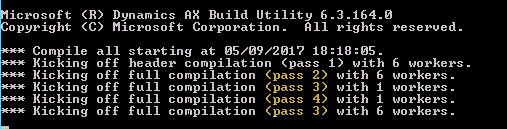
Sven P. wrote, "Usually, I blame production outages on developers who, I swear, have trouble counting to five. After seeing this, I may want to blame the compiler too."
"Whenever I hear someone complaining about their device battery life, I show them this picture," wrote Renan.
"Prepaying for gas, my credit card was declined," Rand H. writes, "I was worried some thief must've maxed it out, but then I saw how much I was paying in taxes."
Brett A. wrote, "Yo Dawg I heard you like zips, so you should zip your zips to send your zips."
[Advertisement] BuildMaster integrates with an ever-growing list of tools to automate and facilitate everything from continuous integration to database change scripts to production deployments. Interested? Learn more about BuildMaster!
To read the full article, please visit The Daily WTF




 [Advertisement] Universal Package Manager - ProGet easily integrates with your favorite Continuous Integration and Build Tools, acting as the central hub to all your essential components. Learn more today!


 [Advertisement]



 [Advertisement]


 [Advertisement] Manage IT infrastructure as code across all environments with





 [Advertisement]