Friday, August 31, 2018

CodeSOD: Why I Hate Conference Swag (and What can be Done About it)

Hey everyone - I'm at a conference this week I'd like to cover a WTF that I've been seeing this week - VENDOR SWAG.

IGC Show trade show floor Aug 2016

Ok, if you are one of those poor souls who are always heads down in code and never attend workshops or conferences, this won't make much sense to you, but here's the deal - companies will set up a booth or a table and will pass out swag in exchange for your contact info and (possibly) a lead. To me, this is easily the dirtiest transaction one can make and rife with inequalities. Your information is super valuable - as in possibly generating thousands or millions of sales dollars. The 'gift' will be SUPER cheap by comparison.

How cheap? WELL, here are some examples:

  1. Pens - My bag runneth over with pens. Really, I'm fine, I don't nee any more. Also, if you must make that your swag, don't make me 'work' for a pen. Really? I'm not going to sit through a session about hybridized lizards in the cloud for your crummy mass ordered pens.
  2. Buttons - If the button is made of money, and doesn't have a pin in the back, and it's actually just a $5 bill, then yeah, sure. Other than that? Big nope.
  3. Poor quality shirts or outright badly designed shirts - I know what I'm talking about here. Give me a shirt that YOU'D like to wear, and I don't mean just because you work there. Also - when you hand me a shirt that's made out of tissue paper thin material, it's like "Hey, let's not kid each other - you're just going to turn this thing into a rag."
  4. Four words - Fun Size Candy Bars - If you do this, I hate you on sight. You didn't plan ahead and ended up hitting Target on your way from the airport. Just because vendor halls are like Halloween trick-or-treating doesn't mean you have to handle it that way. Shame on you and your company for dialing that one in.

True - I can, and certainly do, just say "no thanks" to that miniature Butterfinger swag ought be good. An equal exchange that's not more like selling your soul for a pen.

So, with that said...the solution? Enter Virtual Swag or vSwag.

This year, I participated in my first Hackathon ever and our team's theme was Blockchain. After registering we were given a while to prepare which I took advantage of to research the topic and for me, that was pretty fun (but actually we only just made a team after arriving).

The way we planned it, conference attendees can collect vSwag tokens from vendors and redeem them for swag items.

Below is the Solidity file I fudged together based heavily on the the project is out on Github or if you want to skip to the good stuff (and like memes) check out the PowerPoint (*chef kiss*).


pragma solidity ^0.4.18;

/* This is horrible code. */

contract vSwag {
    address public vendorName;
    uint public swagGoal;
    uint public amountRaised;
    uint public deadline;
    uint public price;
    //token public tokenReward;
    mapping(address => uint256) public balanceOf;
    bool swagGoalReached = false;
    bool vSwagClosed = false;

    event GoalReached(address recipient, uint totalAmountRaised);
    event SwagswagToken(address backer, uint amount, bool isContribution);

         /* This creates an array with all balances */
   // mapping (address => uint256) public balanceOf;
        
    /**
     * Constructor function
     *
     * Setup the owner
     */
    function vSwagConstructor(
        address ifSuccessfulSendTo,
        uint swagGoalInEthers,
        uint durationInMinutes,
        uint etherCostOfEachToken,
        address addressOfTokenUsedAsReward
    ) public {
        vendorName = ifSuccessfulSendTo;
        swagGoal = swagGoalInEthers * 1 ether;
        deadline = now + durationInMinutes * 1 minutes;
        price = etherCostOfEachToken * 1 ether;
                balanceOf[msg.sender] = 1000;              // How much swag coin you got, captain?

    }

        /* Send swag */
    function transfer(address _to, uint256 _value) public returns (bool success) {
        require(balanceOf[msg.sender] >= _value);           // Check if the sender has enough
        require(balanceOf[_to] + _value >= balanceOf[_to]); // Check for overflows
        balanceOf[msg.sender] -= _value;                    // Subtract from the sender
        balanceOf[_to] += _value;                           // Add the same to the recipient
        return true;
    }
        
    /**
     * Fallback function
     *
     * The function without name is the default function that is called whenever anyone sends funds to a contract
     */
    function () payable public {
        uint amount = msg.value;
        balanceOf[msg.sender] += amount;
        amountRaised += amount;
        transfer(msg.sender, amount / price);
       emit SwagswagToken(msg.sender, amount, true);
    }

    modifier afterDeadline() { if (now >= deadline) _; }

    /**
     * Check if goal was reached
     *
     * Checks if the goal or time limit has been reached and ends the campaign
     */
    function checkGoalReached() public afterDeadline {
        if (amountRaised >= swagGoal){
            swagGoalReached = true;
            emit GoalReached(vendorName, amountRaised);
        }
    }


    /**
     * Decrement Swag
     *
     */
    function safeWithdrawal() public afterDeadline {
        if (!swagGoalReached) {
            uint amount = balanceOf[msg.sender];
            balanceOf[msg.sender] = 0;
            if (amount > 0) {
                if (msg.sender.send(amount)) {
                   emit SwagswagToken(msg.sender, amount, false);
                } else {
                    balanceOf[msg.sender] = amount;
                }
            }
        }

        if (swagGoalReached && vendorName == msg.sender) {
            if (vendorName.send(amountRaised)) {
               emit SwagswagToken(vendorName, amountRaised, false);
                        } else {
                                //something something...give back swag coin
                swagGoalReached = false;
            }
                
        }
    }
}

So, vendors, hear me now - steal this idea!

[Advertisement] Continuously monitor your servers for configuration changes, and report when there's configuration drift. Get started with Otter today!


To read the full article, please visit The Daily WTF

Thursday, August 30, 2018

Keeping Up Appearances

Just because a tool is available doesn't mean people will use it correctly. People have abused booleans, dates, enums, databases, Go-To's, PHP, reinventing the wheel and even Excel to the point that this forum will never run out of material!

Bug and issue trackers are Good Things™. They let you keep track of multiple projects, feature requests, and open and closed problems. They let you classify the issues by severity/urgency. They let you specify which items are going into which release. They even let you track who did the work, as well as all sorts of additional information.

An optical illusion in which two squares that are actually the same color appear to be different colors

Every project, no matter how big or small, should make use of them.

Ideally, they would be used correctly.

Ideally.

Matt had just released the project that he'd been working on for the past few years. As always happens, some "issues" cropped up. Some were genuine defects. Some were sort-of-enhancements based on the fact that a particular input screen was unwieldy and needed to be improved. At least one was a major restructuring of a part of the project that did not flow too well. In all, Matt had seven issues that needed to be addressed. Before he could deliver them, he needed defect tickets in the bug tracking system. He wasn't authorized to raise such tickets; only the Test team could do that.

It took a while, but he finally received a ticket to do the work to... but everything had been bundled up into one ticket. This made it very difficult to work with, because now he couldn't just clear each issue as he went. Instead, he had to package them up in abeyance, so to speak, and only release them when they were all complete. This also meant that the test documentation, providing instructions to the Test team as to how to ensure that the fix was working as required, all had to be bundled up into one big messy document, making it more difficult for Testers to do their job as well.

So he questioned them: If we can raise a single defect ticket, then what stops us from raising all 7 needed tickets so that the issues can be addressed separately? The answer was: Because these defects appear post-release, it is clear that they weren't caught at the pre-release stage, which means that Somebody Wasn't Doing Their Job Properly in the Test team, which makes them Look Bad; it brings their failure to catch the issues to the attention of Management.

In other words, in order to keep the Test team from looking bad, they would only ever raise a single ticket (encompassing all detected issues) for any given release.

Imagine if all of the bugs from your last major release were assigned to you personally, in a single ticket. Good luck estimating, scheduling, coding, debugging and documenting how to test the single logical bug!

Matt raised this bad practice with management, and explained that while the reason for why they do this is to hide their inadequacy, it also prevents any meaningful way to control work distribution, changes and subsequent testing. It also obscures the actual number of issues (Why is it taking you seven weeks to fix one issue?).

Management was not amused at having been misled.

[Advertisement] Otter - Provision your servers automatically without ever needing to log-in to a command prompt. Get started today!


To read the full article, please visit The Daily WTF

Wednesday, August 29, 2018

CodeSOD: Rectangle Marks The Spot

World Map flat Mercator

If you need your user's country of origin, there are many ways you can go about obtaining it programmatically. Some may opt for a simple drop-down that prompts the user to specify his/her country. If you don't want to burden your user this way, you might look at their session data and return their country of origin, time zone, or some other useful information. If you have fancy enough APIs at your disposal, you could even reverse geocode the user's longitude/latitude position and obtain an address.

Or, you can start with their location and perform the code equivalent of throwing a dart at a map littered with creepy-looking post-it notes:

def country(latitude, longitude):
  if -130 < longitude < -60:
    return 'US'
  elif 110 < longitude < 155 and -40 < latitude < -10:
    return 'AU'
  elif -8 < longitude < 2 and 50 < latitude < 60:
    return 'GB'
  elif 60 < longitude < 100:
    return 'IN'
  return None

def timezone(longitude):
  return int(longitude * 0.0655737704918)


Submitter Zekka writes: "When we decided to internationalize our app, it became necessary to determine what country the user was in. That's not even the correct constant to convert longitude to approximate timezone. I have no clue where they got it. It should be 0.06666 ..."

[Advertisement] ProGet supports your applications, Docker containers, and third-party packages, allowing you to enforce quality standards across all components. Download and see how!


To read the full article, please visit The Daily WTF

Noah Guthrie: Musician Brings The House Down With Original Song

Noah Guthrie: Musician Brings The House Down With Original Song – America’s Got Talent 2018

The post Noah Guthrie: Musician Brings The House Down With Original Song appeared first on Viral Viral Videos.


To read the full article, please visit Viral Viral Videos

Tuesday, August 28, 2018

CodeSOD: Look Ahead. Look Out!

I'm an old person. It's the sort of thing that happens when you aren't looking. All the kids these days are writing Slack and Discord bots in JavaScript, and I remember writing my first chatbots in Perl and hooking them into IRC. Fortunately, all the WTFs in my Perl chatbots have been lost to time.

"P" has a peer who wants to scrape all the image URLs out of a Discord chat channel. Those URLs will be fetched, then passed through an image processing pipeline to organize and catalog frequently used images, regardless of their origin.

Our intrepid scraper, however, doesn't want to run the risk of trying to request a URL that might be invalid. So they need a way to accurately validate every URL.

Now, the trick to URLs, and URIs in general, is that they have a grammar that seems simple but is deceptively complex and doesn't lend itself to precise validation via regular expressions. If you were a sane person, you'd generally just ballpark it into the neighborhood and handle exceptions, or maybe copy/paste from StackOverflow and call it a day.

This developer spent 7 hours developing their own regular expression to validate a URL. They tested it with every URL they could think of, and it passed with 100% accuracy, which sounds like the kind of robust testing we'd expect from the person who wrote this:


const regex = /((?:(http|https|Http|Https|rtsp|Rtsp):\/\/(?:(?: [a-zA-Z0-9\$\-\_\.\+\!\*\'\(\)\,\;\?\&\=]|(?:\%[a-fA-F0-9]{2})){1,64}(?:\: (?:[a-zA-Z0-9\$\-\_\.\+\!\*\'\(\)\,\;\?\&\=]|(?:\%[a-fA-F0-9]{2})){1,25})? \@)?)?((?:(?:[a-zA-Z0-9][a-zA-Z0-9\-]{0,64}\.)+(?:(?:aero|arpa|asia|a [cdefgilmnoqrstuwxz])|(?:biz|b[abdefghijmnorstvwyz])|(?:cat|com|coop|c [acdfghiklmnoruvxyz])|d[ejkmoz]|(?:edu|e[cegrstu])|f[ijkmor]|(?:gov|g [abdefghilmnpqrstuwy])|h[kmnrtu]|(?:info|int|i[delmnoqrst])|(?:jobs|j[emop] )|k[eghimnrwyz]|l[abcikrstuvy]|(?:mil|mobi|museum|m[acdghklmnopqrstuvwxyz]) |(?:name|net|n[acefgilopruz])|(?:org|om)|(?:pro|p[aefghklmnrstwy])|qa|r [eouw]|s[abcdeghijklmnortuvyz]|(?:tel|travel|t[cdfghjklmnoprtvwz])|u [agkmsyz]|v[aceginu]|w[fs]|y[etu]|z[amw]))|(?:(?:25[0-5]|2[0-4][0-9]|[0-1] [0-9]{2}|[1-9][0-9]|[1-9])\.(?:25[0-5]|2[0-4][0-9]|[0-1][0-9]{2}|[1-9][0-9] |[1-9]|0)\.(?:25[0-5]|2[0-4][0-9]|[0-1][0-9]{2}|[1-9][0-9]|[1-9]|0)\.(?:25 [0-5]|2[0-4][0-9]|[0-1][0-9]{2}|[1-9][0-9]|[0-9])))(?:\:\d{1,5})?)(\/(?:(?: [a-zA-Z0-9\;\/\?\:\@\&\=\#\~\-\.\+\!\*\'\(\)\,\_])|(?:\%[a-fA-F0-9]{2}))*)? (?:\b|$)/gi
 

Note each use of (?:). These are "look ahead" matches, which will execute depending on what comes after them. Using one or two of these in a regex makes its massively more complicated. This regex uses 32 look ahead expressions, taking "unreadability" to a new height, and flirting with the lesser demons which serve Zalgo. Bonus points for making the comparison case insensitive, but also checking for both http and Http, just in case.

"There's no module on NPM that can do all of this!" the developer proudly proclaimed. They then presumably uploaded it to NPM as a "microframework", used it within a few of their own modules, and then those modules got used by some other modules, and now 75% of the web depends on this regex.

[Advertisement] ProGet can centralize your organization's software applications and components to provide uniform access to developers and servers. Check it out!


To read the full article, please visit The Daily WTF

Guys Eat Ghost Pepper Chili Dipped In World’s Hottest Chili Sauce

These Two Guys Try Dipping A Ghost Chili Into Carolina Reaper Paste AND Instantly Regret It #GHOSTPEPPER #FIREASS #VIRALVIDEO #CAROLINAREAPERPEPPER

The post Guys Eat Ghost Pepper Chili Dipped In World’s Hottest Chili Sauce appeared first on Viral Viral Videos.


To read the full article, please visit Viral Viral Videos

Monday, August 27, 2018

Cat Not Ordinary Viral Video

Abby sings to Bailey as he snuggles in her arms and falls asleep. Cat Viral Videos FB page: Bailey No Ordinary Cat

The post Cat Not Ordinary Viral Video appeared first on Viral Viral Videos.


To read the full article, please visit Viral Viral Videos

CodeSOD: Assertive Programming

Defensive programming is an important tool in any developer's toolbox. In strictly typed languages, types themselves provide a natural defense against certain classes of bugs, but in loosely typed languages, you may have to be more clear about your assumptions.

For example, in Python, you might choose to use the assert keyword to, well, assert that something is true. It's often used in debugging, but it's also a good way to ensure that the state of the parameters passed to a function, or some other state of your system is correct before doing anything else. If it's not, the code raises an exception.

Dima R found this "interesting" riff on that concept.


try: assert r.status_code == 201 except: print(r.text) pass
 

Here, the assertion is confirming that we get the expected HTTP status code from a request, but if we didn't, it doesn't bubble up the exception- it just prints the body of the response.

This code has been in production for some time. When Dima tracked down the culprit and asked what they were thinking, the developer admitted:

it was originally an assert just for sanity, but then I wanted to print the result if the assert failed and I wasn't paying very much attention lol

[Advertisement] Utilize BuildMaster to release your software with confidence, at the pace your business demands. Download today!


To read the full article, please visit The Daily WTF

Sunday, August 26, 2018

Humpback Soaks Alaskan Whale Watchers

Our guests were in the splash zone out on The Taz whale watching boat with Cross Sound Express! Gustavus, Alaska, home of the best whale watching. Whale Viral Video

The post Humpback Soaks Alaskan Whale Watchers appeared first on Viral Viral Videos.


To read the full article, please visit Viral Viral Videos

Friday, August 24, 2018

Batman Gets Pulled Over by The Cops

So maybe the caped crusader had some lives to save or maybe his foot got a little too heavy on the gas pedal. Not sure why, but Batman gets pulled over bu Canadian police in […]

The post Batman Gets Pulled Over by The Cops appeared first on Viral Viral Videos.


To read the full article, please visit Viral Viral Videos

Error'd: Exponential Customer Service

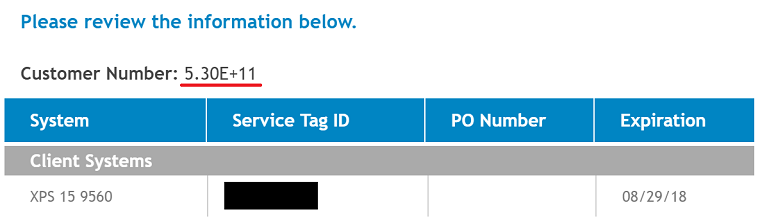
"I think I'm missing some precision in my Dell customer number," writes Steve B.


Tief K. wrote, "Looking for culture in Vienna? You might try the theatre for a surprise."


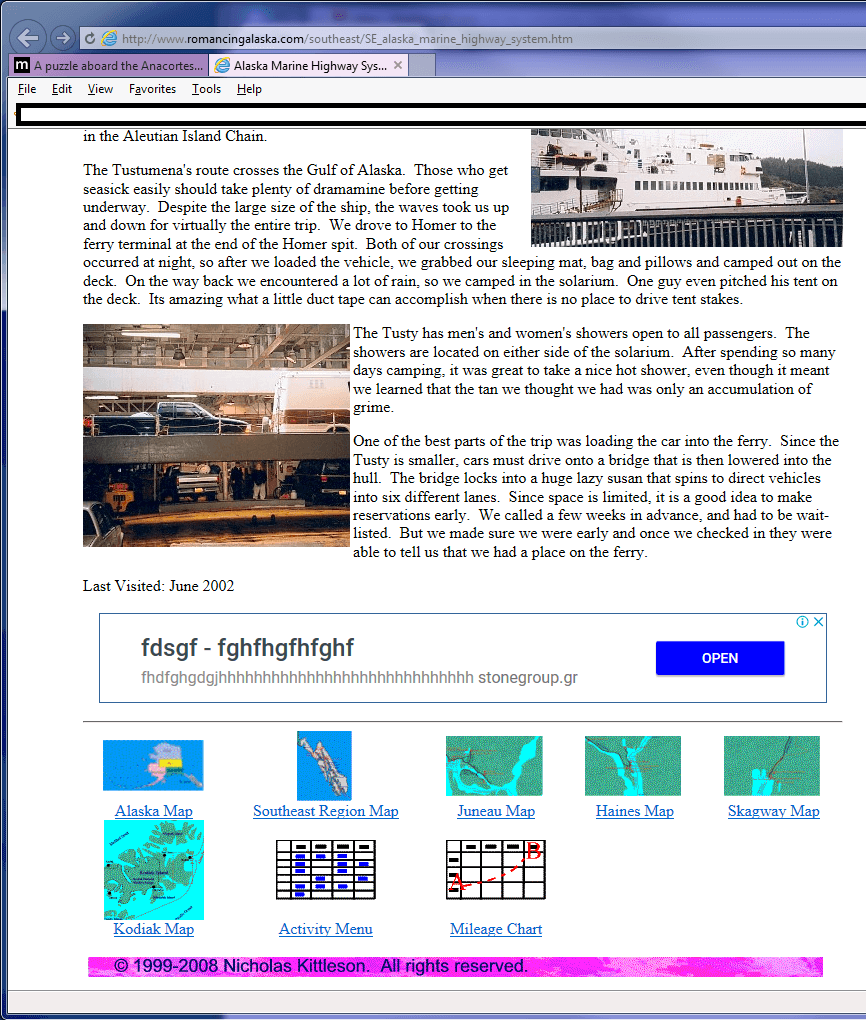
"Funny thing happened while reading Raymond Chen's blog https://blogs.msdn.microsoft.com/oldnewthing/20180803-01/ where he referenced a page on Alaskan ferries which then showed me the attached ad," Sam L. writes.


Alicia wrote, "Is there anything Amazon doesn't sell?"


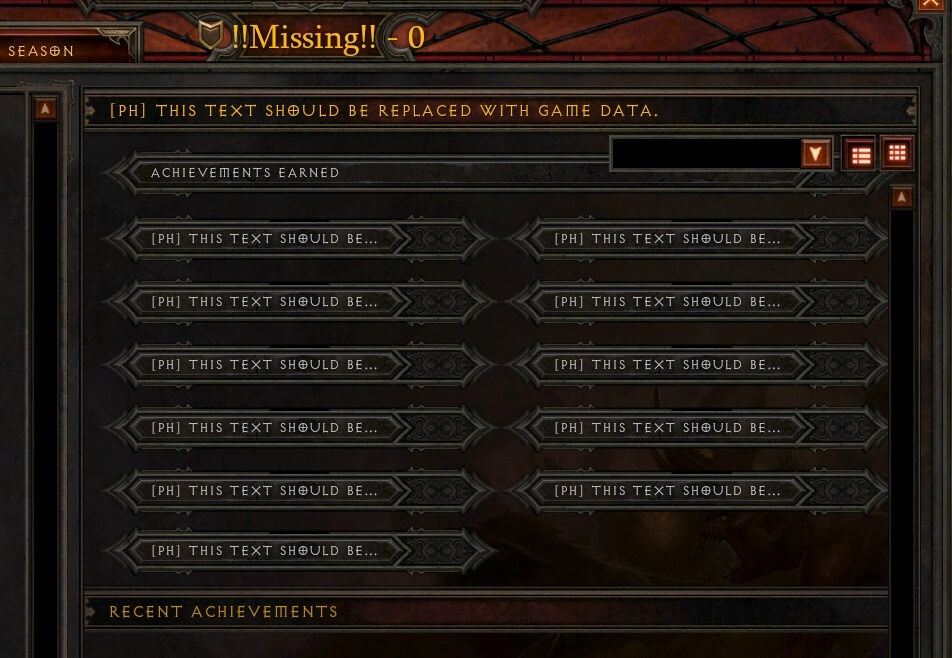
"I was having Internet connection problems, so decided to relax a bit and play some Diablo 3. Maybe it's a sign that I should go read a book instead," Radek K. writes.


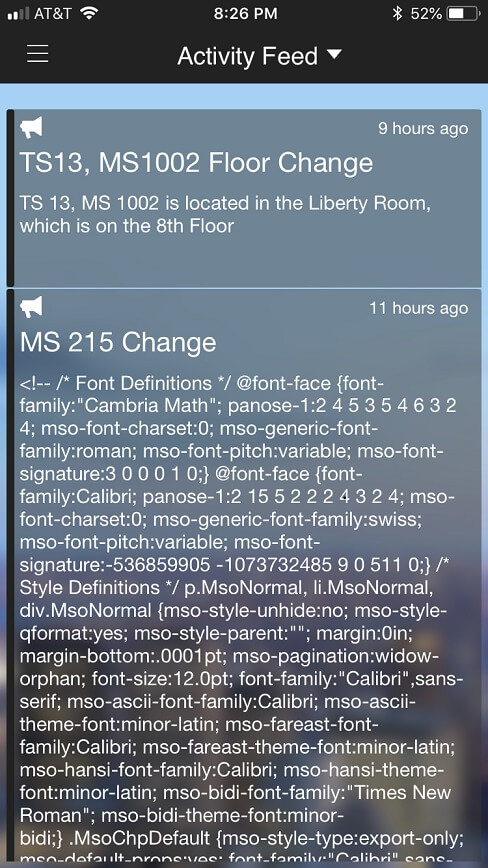
Steve L. wrote, "Looks like mini symposium 215 has been updated to discuss the topic of HTML pasting worst practices."


[Advertisement] Forget logs. Next time you're struggling to replicate error, crash and performance issues in your apps - Think Raygun! Installs in minutes. Learn more.


To read the full article, please visit The Daily WTF

Thursday, August 23, 2018

CodeSOD: Extending Yourself

Optional parameters are a great tool for building flexible APIs. In most languages, they're not strictly necessary- if you have function overloading, the difference between optional parameters and an overloaded function is just the quantity of boilerplate- but they're certainly a nice to have.

Well, they're a nice to have in the right hands.

Scattered through their code base, Ian P saw many, many calls to dutData.GetMessages(). As they explored the code base, they used Visual Studio's "go to definition" feature to jump to the implementation- and found they were sometimes ending up in different spots.


public static IEnumerable<string> GetMessages(this ScreenScraper screenScraper) { //Do some stuff to get the messages } //snip 100+ lines public static IEnumerable<string> GetMessages(this ScreenScraper screenScraper, long timeSpane = 30000, int timeInterval = 500) { //Do some different stuff to get the messages }
 

Frankly, I'm a little surprised that this is even possible. It offered warnings, but no errors, presumably because this is an odd bit of syntactic sugar in C# called "extension methods", which are C#'s answer to "monkey patching". Neither GetMessages is actually a member of ScreenScraper, but if you call GetMessages on a ScreenScraper object, C# will call GetMessages and pass an instance of ScreenScraper into it.

The C# compiler is the real WTF. As for Ian, the fix was simple: rename some methods for clarity, and convert extensions to instance methods as appropriate.

[Advertisement] Forget logs. Next time you're struggling to replicate error, crash and performance issues in your apps - Think Raygun! Installs in minutes. Learn more.


To read the full article, please visit The Daily WTF

Wednesday, August 22, 2018

Representative Line: You Can Only Get What You Have

Sean's ongoing career as a consultant keeps supplying him with amazing code.

Let's talk about encapsulation. We put getters and setters around our objects internalsto help keep our code modular. Given an object, we call something like getUsername to extract a piece of that object safely.

In the same codebase as IsTableEmpty, Sean found this short-but-sweet gem:


public String getUsername(String username) { return username; }
 

This version of getUsername requires you to already have the username. Oddly, it behaves unpredictably, as if you pass it a postal code, it returns the postal code, and doesn't complain that it isn't a username.

[Advertisement] Ensure your software is built only once and then deployed consistently across environments, by packaging your applications and components. Learn how today!


To read the full article, please visit The Daily WTF

Tuesday, August 21, 2018

6 Year Old Kid Lands a Backflip on His Bike

Last month Brody Evan became the youngest person to ever land a backflip on their bike at the age of 6. He was introduced to BMX at an early age and started riding a strider […]

The post 6 Year Old Kid Lands a Backflip on His Bike appeared first on Viral Viral Videos.


To read the full article, please visit Viral Viral Videos

CodeSOD: Is This Terning Into a Date?

Bad date handling code is like litter: offensive, annoying, but omnipresent. Nobody is specifically responsible for it, nobody wants to clean it up, and we end up ignoring it.

Murtaza K offers up a particularly malodorous example, though, that's worthy of note. It's got everything: string mangling, assumptions that ignore locale, bad ternaries, and it's completely unnecessary.


string Stdt = String.Empty; string FromDt = stDtTime.ToShortDateString(); string[] varFromDate = FromDt.Split('/'); string mth = Convert.ToInt32(varFromDate[0]) < 10 ? varFromDate[0] : varFromDate[0]; string date = Convert.ToInt32(varFromDate[1]) < 10 ? varFromDate[1] : varFromDate[1]; FromDate = mth + "/" + date + "/" + varFromDate[2]; Stdt = FromDate;
 

Let's start with "unnecessary". Assuming a US-like locale, or as I like to call it, "middle-endian dates", Stdt will contain what was in FromDt right at the start, rendering all of this pointless. Pointless, anyway, if your goal is to handle dates. But there's so much else special about this, and specifically, I'm talking about those ternaries.

string mth = Convert.ToInt32(varFromDate[0]) < 10 ? varFromDate[0] : varFromDate[0];

I have a hunch about what's going on here. Imagine, if you will, you don't actually know how to write software. What you do know is a vague bit about how to use Visual Studio, and how to search Stack Overflow. Over the years of your career, you haven't really learned anything or gotten better at your job, but you have built an increasingly complex pile of code snippets you've copy/pasted from Stack Overflow. They've mutated as you try and adapt them to new scenarios.

So, what is in varfromDate[0]? Why, a number. I mean, the datatype is string, but you don't understand what that means. You just know it's a number. So you know you need to convert it to a string to do some string concatenation. One of your many snippets was a homework question about converting numbers to strings. The goal was to teach students how to do modular arithmetic to get the ones place, tens place, etc., but the snippet you copied was a bad answer which used individual ternary blocks to pick off individual digits.

You don't know what it is, or what you're doing, but you copy that code in blindly. It doesn't work. You tweak things until it does, and in this case, you return the same value from either branch.

Then you mash the strings back together to make a date. Once it works, you copy/paste it back into the Word document you use for tracking all your "knowledge". You can now reuse this solution in the future.

Do I know that's what happened? Of course not. Is that still probably what happened? Yeah, I think so.

[Advertisement] Forget logs. Next time you're struggling to replicate error, crash and performance issues in your apps - Think Raygun! Installs in minutes. Learn more.


To read the full article, please visit The Daily WTF

Monday, August 20, 2018

Leaky Fun For the Whole Family

Those of us that had the luxury of learning to program in C or other non-auto-gc'd langauges, learned early on the habit of writing the allocation and deallocation of a block of memory at the same time, and only then filling in the code in between afterward. This prevented those nasty I-forgot-to-free-it memory leaks.

Cedar point

Of course, that doesn't guarantee that memory can't ever leak; it just eliminates the more obvious sources of leakage.

Daniel worked on an installation for a theme park attraction sometime back. The task was to use a computer vision system to track the movement of a number of moving projection screens, and then send the tracking data to a video system in order to move the image around within the projection raster to keep it static on the screen.

He was using a specialised product designed for industrial machine-vision applications. It was essentially a camera with a small Windows XP machine inside, which ran a custom application developed using a commercial machine vision programming toolkit. The software looked for the position of 4 infra-red LEDs using the camera and then output their coordinates via ethernet to the video system.

After the installation was complete, Daniel was back in the home office when he got a call from the park. Apparently the camera software was crashing after around 10 days of uptime. He remoted in and saw the cause was an out of memory failure. This was his worst nightmare.

A nice feature of these boxes was that they had a mechanism to essentially 'lock out' changes from the hard drive. After the system was setup and working, an option was enabled which diverted all hard drive writes to RAM, discarding them on a reboot or power down. This had the advantage the camera system didn't require any software maintenance as it would be 'fresh' every time you turned it on, which is great for an installation that could be in place for over 10 years. However he was concerned about what this might mean for uptime as any process which repeatedly wrote any significant amount of data to the drive would quickly fill up the 1GB of RAM available on the cameras. Around 60% of this was used by the running process anyway, so there wasn't a huge amount of headroom.

This wasn't a large source of concern when developing the installation as there was an understanding that the system would be powered down every night when the park was closed (which would have been the easy solution to this problem). He'd noticed that the RAM was filling up slowly as the camera ran, but not at a rate which would be dangerous for the target uptime of 24 hours.

Unfortunately, the daily power cycle didn't happen, and any kind of system failure caused the on-site techs to get nervous; clearly this was an issue that would have to be fixed the hard way. He was convinced that the drive lock-out feature was the cause of this issue.

From then on, every 10 days, when the park was closed, Daniel remoted in and tried various steps on the cameras to find the process that was writing to "disk". The complete installation had 6 cameras so he would try different steps on each system to try and diagnose the issue, enabling/disabling various system processes and options within the machine vision development toolkit used to write the application. He would leave it for 10 days and then wait to hear from the onsite techs if the changes had been successful. These failures went on for around 2 months.

Finally in desperation, Daniel sent off the custom machine vision application to the company who developed the programming toolkit for their developers to analyze and see if they could point to the process causing the hard drive write.

Around a week later, they emailed back saying We couldn't find any hard drive write, but we did locate a small memory leak in one of your routines, around 8 bytes per image frame. The routine in question was in the main image analysis path. The cameras ran at 60 fps, so some quick arithmetic yields:

  8 bytes/frame * 60 fps * 86,400 sec/day * 10 days = 414,720,000 bytes = 0.41 gigabytes == total available memory

Aha; it was an old-fashioned memory leak after all!

[Advertisement] Continuously monitor your servers for configuration changes, and report when there's configuration drift. Get started with Otter today!


To read the full article, please visit The Daily WTF

Sunday, August 19, 2018

Nerf Blaster Viral Videos | Summer Viral Videos

Check out this video of nerf blasters being used on a floating island. Nerf Blasters Viral Videos

The post Nerf Blaster Viral Videos | Summer Viral Videos appeared first on Viral Viral Videos.


To read the full article, please visit Viral Viral Videos

Saturday, August 18, 2018

Homeless Man’s Dream Come True!

This was amazing. Watch this viral video of a homeless man getting his wish fulfilled. From the author “So my good friend Mike had one wish since I met him, and I had to make […]

The post Homeless Man’s Dream Come True! appeared first on Viral Viral Videos.


To read the full article, please visit Viral Viral Videos

Friday, August 17, 2018

Error'd: The Illusion of Choice

"So I can keep my current language setting or switch to Pakistani English. THERE IS NO IN-BETWEEN," Robert K. writes.


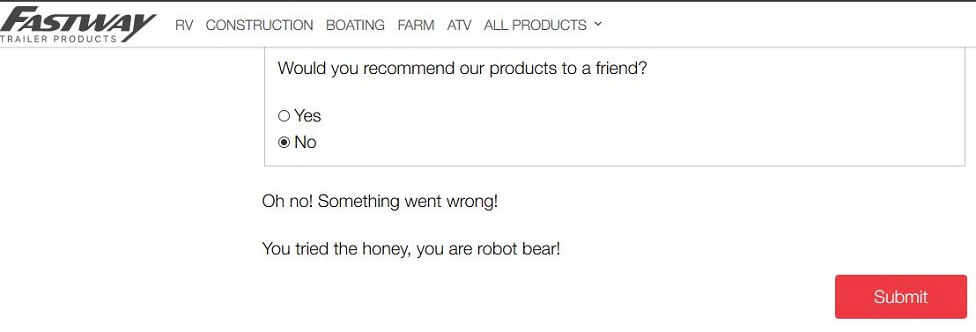
"I guess robot bears aren't allowed to have the honey, or register the warranty on their trailer hitch" wrote Charles R.


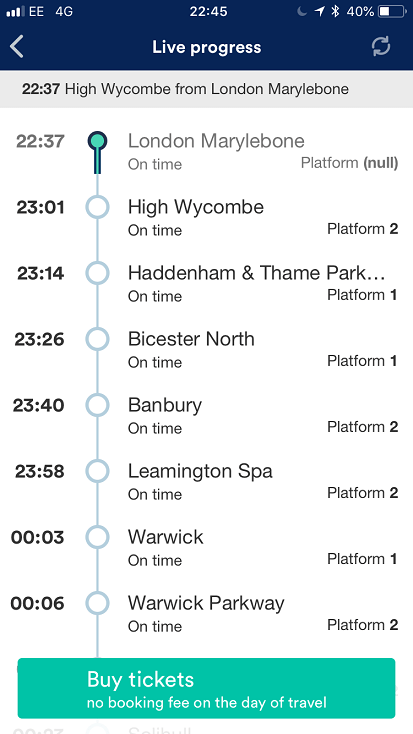
"Not to be outdone by King's Cross's platform 0 [and fictional platform 9 3/4], it looks like Marylebone is jumping on the weird band-wagon," David L. writes.


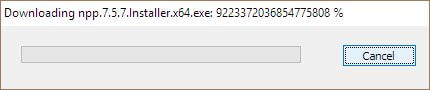
Alex wrote, "If the percentage it to be believed, I'm downloading Notepad+++++++++++++++."


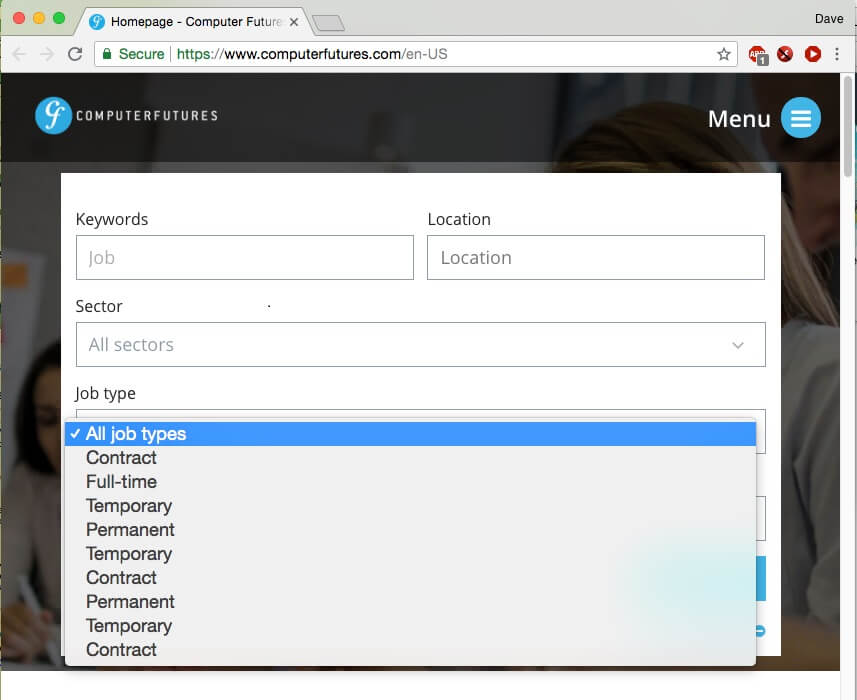
"Hmm, so many choices?" writes Dave A.


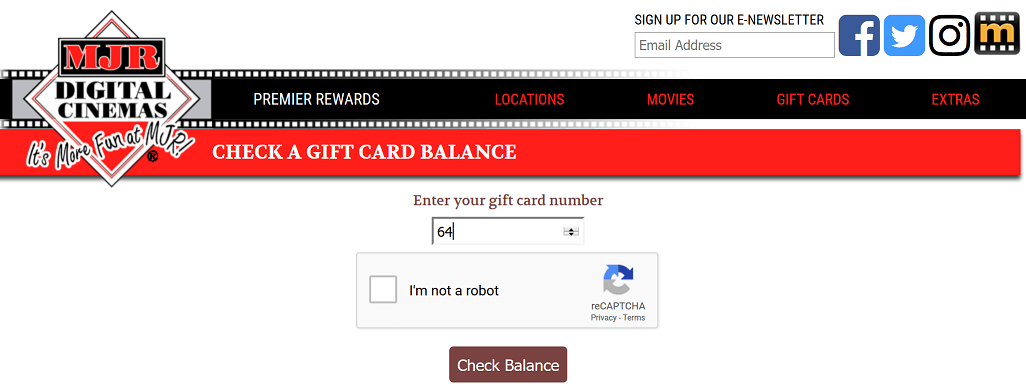
Ergin S. writes, "My card number starts with 36 and is 14 digits long so it might take me a little while to get there, but thanks to the dev for at least trying to make things more convenient."


[Advertisement] Otter - Provision your servers automatically without ever needing to log-in to a command prompt. Get started today!


To read the full article, please visit The Daily WTF