Friday, November 30, 2018

Error'd: Cash vs File Cache

"This was the ATM in the lobby of a certain hotel in Vienna," wrote Buddy, "The nice lady working at the reception desk said that 'it's been doing that, but it usually works.'"


"I know the US refuses to use the metric system, but I feel like Con Ed is taking it to the next level," writes George.


Adam G. writes, "Apparently, native CSS is now integrated in the latest Java SE release."


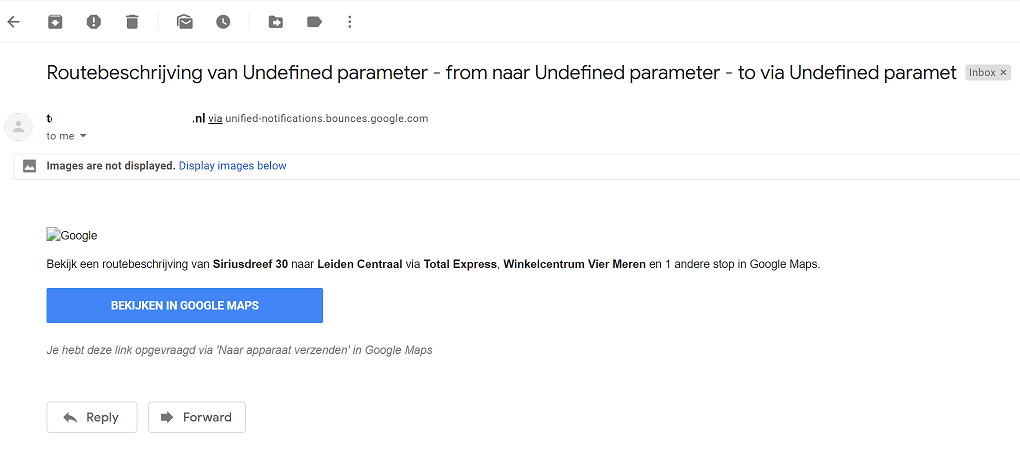
"Right - I don't know where that is, Google Maps, that's why I asked," writes Tom.


Bob B. wrote, "The request URI is too large, just like the font!"


"Of the things for Amazon to get wrong on Amazon Prime Day..." Neil D. writes.


[Advertisement] ProGet supports your applications, Docker containers, and third-party packages, allowing you to enforce quality standards across all components. Download and see how!


To read the full article, please visit The Daily WTF

Thursday, November 29, 2018

A Dark Cloud Looming

Buford was a contract developer working at a mid-sized financial firm. He had just wrapped up a lengthy project and was looking for something new to sink his teeth into. Tanner, the manager in his area, tasked him with moving their implementation of Jenkins into "this great new thing they call The Cloud."

Tanner recently returned from a conference with a bunch of swag from a company called PuffyCloud. They claimed to have the easiest cloud-based implementation of Jenkins in the business. "It's pretty much just a copy-paste job according to this whitepaper they gave me. Take a look, create some user stories, and have it done by the end of the next sprint," Tanner instructed.

Buford opened up the whitepaper and soon found that PuffyCloud was certainly full of puffery. They boasted about how their approach was "production-ready for an enterprise environment" and "dozens of organizations have revolutionized their systems with PuffyCloud and the magic of our simple Docker Compose code."

After getting through several pages of drivel, Buford already had a better, cheaper way in mind. He returned to Tanner's office to explain, "Look, I don't know what these PuffyCloud guys will charge, but I'm certain I can get the same result for only the cost of my time. I can make my own Docker script to install everything on a cloud-based server that we control without a costly middle-man license from them."

Tanner furrowed his brow before responding, "Bah! Doing this yourself will take way too long. I guess you didn't hear me the first time I explained this PuffyCloud thing. Copy. And. Paste. Do that and you'll finish easily with time to spare in the sprint.

Buford went back to reading the mind-numbing whitepaper since Tanner was clearly insistent on going with PuffyCloud. Ten minutes later, he finally got to the "production-ready for an enterprise environment" script:


jenkins_master:
 image: jenkins_master
 cpu_shares: 100
 mem_limit: 500M ports:
 ports:
 - "8080:8080",
 “50000:50000”
 volumes_from: jenkins_dv
jenkins_dv:
 image: jenkins_dv
 cpu_shares: 100
 mem_limit: 500M

Buford had so many questions from so little code. It sure as hell wasn't copy-paste-production. There was no way in hell 500M of memory would be enough, even for a bare-bones deployment. The image didn't even include a Docker repository. And that's before you take into account obvious syntax errors.

Predictably, the setup and implementation of PuffyCloud took Buford longer than a two week sprint. Since that didn't meet Tanner's expectations, Buford's contract was terminated. He was glad to be free of that mess but felt slightly bad that some other poor soul would have to deal with the PuffyCloud crapstorm.

[Advertisement] Otter - Provision your servers automatically without ever needing to log-in to a command prompt. Get started today!


To read the full article, please visit The Daily WTF

Creepy fish follows this person’s every move

Creepy fish follows your every move Here we get to see how a creepy fish follows a person’s every move from inside a medium sized Fish tank. The guy in the video walks around a lot to make sure the fish is in fact following him and to his surprise finds that it is!

The post Creepy fish follows this person’s every move appeared first on Viral Viral Videos.


To read the full article, please visit Viral Viral Videos

Wednesday, November 28, 2018

Project Scheduling by T-Shirt

In early 2002, Bert landed a job at Initech, which released its own protocol analyzer tool. Technically, they released a whole slate of protocol analyzers, data loggers, analytics tools, with overlapping features and business cases. Their product catalog had grown over the years, and was a bit of a thicket.

The team Bert joined was a decent mix of talent. Some, like him, were new to the industry. There were some more experienced devs, who knew the product and the low-level internals their software needed to navigate. And then there was Herb.

Herb was every stereotype of the 70s era hacker, aged up into the 00s. He had a collection of buckling spring keyboards, thought 64k of RAM was an incomprehensibly large amount, could code Assembly faster than most of the rest of the team could do C, and he knew every line of code in every product, and knew exactly what it did and why it was there.

Jack, the team's project lead, was Herb's polar opposite. Young, with a shiny new MBA, a focus on the kind of networking skills that didn't involve CAT5 cable, and absolutely no useful knowledge about anything. "Our team exists to serve the business," Jack was fond of saying. "So whatever the business needs, we do. No. Matter. What."

The business decided that their complicated product catalog was hurting their sales. Customers were confused about which product to purchase, some tools were receiving barely any updates, and there really wasn't enough opportunity to "upsell" additional functionality, since every product already had more functionality than most users needed. As part of this process, two older protocol analyzers and an unrelated data logger would be merged into a single product.

Well, the business needed something, and Jack was confident that his team would make it happen. Since this was "just" merging software together, it couldn't possibly be all that much work. It was nothing more than some mechanical repackaging, a little tweaking, and the biggest part of the work was probably updating the help files. Jack didn't need to talk to anyone on the development team to decide how they were going to serve the business.

The new product, Initech's INILYZER, would release in four months. Since it was replacing three existing products, those could be put into end-of-life. Since the INILYZER was definitely coming out in four months, they could be EOLed in four months as well.

Jack's next task was to communicate this to his team at the project kickoff meeting. Jack loved to turn project kickoffs into his own personal motivational speaking exercise, because "That's how you build team morale!" So the kickoff meeting launched with dramatic intro music (provided by a tiny CD player in the corner), a rousing speech, and then the pièce de résistance: freshly made t-shirts for the whole team, emblazoned with: "The INILYZER: August 30, 2002"

August 30th was Jack's predetermined release date.

"Well," Jack said, gleefully doing his best impression of a stadium t-shirt cannon, "does anyone have any questions before we go out and totally crush this awesome project?"

Most of the team cringed, except for Herb. He held up a shirt and pointed at the date. "Yeah. Where'd this timeline come from?"

"It's driven by business need," Jack said.

"Okay, but you're never going to hit this date."

"Um, Herb, we're doers at this company. We have a date, and we are going to hit that date."

This meeting was on a Friday. Over the weekend, Bert and the rest of the team chucked their t-shirts into the rag pile and basically forgot about them. But not Herb. On Monday, Herb walked into the office, proudly wearing his project shirt.

With a small modification, scratched in with red marker. It now read: "The INILYZER: August 30, 20023".

Jack didn't notice it until about 10AM, and when he did, it prompted a meltdown. He started screaming at Herb about insubordination, respect, and team spirit. "I want that shirt off, right now! Or you're fired!"

"I didn't bring anything to change into," Herb said.

Jack stomped off, fuming.

The project continued. August 30th came and went. Summer turned to autumn, autumn into winter. Six months after officially EOLing major products without having a replacement ready to go, there was a management purge throughout the company. Jack got fired, and there was much rejoicing.

Jack's replacement was Emma. It didn't take long for Emma to get a read for the new team, understand the source of the mess, and start working to get it as cleaned up as it could. When upper management started looking at Bert's team as another possible cut, it was Emma who made sure they understood that they were doing the best they could with an unrealistic timeline. Nobody else from the team got fired.

August 30th, 2003, the Initech INILYZER shipped. Emma, having heard about the now infamous t-shirt story, had a small plaque made up to celebrate Herb's accuracy.

Of course, with the unrealistic timeline, unrealistic goals, and management problems, the INILYZER shipped as a pile of barely usable crap. As it turns out, pretty much no customer wanted those products glued together in any way, making the whole effort pointless. It was a technical and commercial flop. The project to replace it started the very same day as its release.

Emma was the PM. Unlike her predecessor, she talked with the developers, especially the most experienced team members, to figure out what the timeline and scope actually were. The project kickoff involved no t-shirts.

[Advertisement] Forget logs. Next time you're struggling to replicate error, crash and performance issues in your apps - Think Raygun! Installs in minutes. Learn more.


To read the full article, please visit The Daily WTF

Snowmobile Jump Fail

The post Snowmobile Jump Fail appeared first on Viral Viral Videos.


To read the full article, please visit Viral Viral Videos

Tuesday, November 27, 2018

A Big Change

Circa 2009, Marylou took a position at an e-commerce firm. It was a small company, which had done its startup phase right in the midst of the DotCom Crash, but somehow made it out the other end with a steady revenue stream.

That itself turned out to be a problem, as once you turn a profit, investors stop investing. The company founders spent the next few years looking for investment to expand, and when they finally got it, they went on a hiring spree. That's where Marylou came in.

The company had been founded by developers, but over the years, they took on more and more leadership responsibilities, and handed off the development responsibilities to Joel. Joel was Marylou's new boss.

"So, the first thing you'll want to do is install our CVS client and our Eclipse plugin," Joel explained, working with Marylou to get her development box set up.

Marylou reached for the Eclipse plugin manager and started searching for a CVS plugin.

"No, no," Joel said. "Our CVS client and plugin. I forked CVS so we can use a customized version."

Marylou paused, waiting for the punchline. Joel took this silence as an opportunity to steal the mouse and start clicking around on her machine for her. "Y'see, we needed a system that let us easily stage releases before going into production. So I built one."

"Um… most organizations use a separate tool that sits on top of source control for that."

"Yeah, but this way, it's integrated!"

Once Marylou was set up, and had the code pulled to her machine, Joel started showing off some of his "clever" solutions. "Like, I wrote this using recursion!"

while(someMethod()) { // Do bunch of stuff }
 

"That… that isn't recursion," Marylou said.

"Well, it's like recursion."

"Right. So… what should I start working on?"

Joel pointed her to a configuration tool he'd built. Instead of building an admin page into the web UI ("That'd be too risky to expose to the Internet!"), he'd written a Java Swing GUI which connected directly to the database. It was a mess of tabs, most of which looked basically identical, did basically the same thing, but were just different enough to absolutely confuse and befuddle any user.

"So, we just need to change the behavior a little bit when someone clicks the save button," Joel explained. The change was a small alteration to one of the verification rules.

Marylou made the change that afternoon, and fired up the application to test. She quickly discovered that she hadn't made the change she thought she had. During Joel's tour of the code and highlights of the bits she'd need to change, she had gotten the absurd idea that all these panels shared a common codebase and inherited from a base class. That, of course, was a crazy idea. Joel had written the code to power one panel, and then copy/pasted it into the next panel, with minor changes. Rinse, repeat, and suddenly you've got a UI with 15 panels that all basically do the same thing but use copy/pasted variations on the code. To change the behavior of the save button required going to each and every panel and making the change. In total, there were 30,000 lines of code that were essentially duplicates of each other.

Marylou made the change, and got it set up through the broken CVS staging system for review. Then she went back, and looked through the duplicated panels. And then started refactoring. And refactoring. It took, in total, about a month of picking apart Joel's mess to build something that acted as a reusable widget with all the required features, which she kept plugging away at while working on all the other code. The 30KLoC shrunk to a "mere" 3KLoC. 15 unique widgets collapsed into one single class which could be dropped onto any screen. Future changes could easily be made.

It was a huge change, and it involved some serious changes to the class hierarchy. It was big enough that when Marylou shipped it off for Joel to code review, she expected it would take him awhile to look at, and would probably receive some pushback.

It was a reasonable expectation, but Joel had his own style. Minutes after she sent the request, Joel approved it, and filled in the required "Code Review Comment" field with "Looks great."

His glowing recommendation didn't help Marylou's confidence about the change, so she tracked down another peer, Chris, who had been hired in the same spree, but had a bit more industry experience. They sat down, went through the code together, and spent a few hours walking through the reasoning behind the changes and the actual implementation thereof. With Chris's seal of approval, Marylou felt much more confident in her changes.

This, of course, proves why Joel led the team. It took Marylou and Chris hours to decide that a massive refactoring "looks great," while Joel could tell at a glance. That's experience.

[Advertisement] Utilize BuildMaster to release your software with confidence, at the pace your business demands. Download today!


To read the full article, please visit The Daily WTF

Monday, November 26, 2018

How To Harness the Power of Videos for Viral Marketing

How To Harness the Power of Videos for Viral Marketing As a business owner, one of the most difficult challenges of moving through the stages of company growth can be creating an effective marketing strategy. The pace of technology is moving this sector forward with increasing swiftness, which can make it difficult to keep pace. […]

The post How To Harness the Power of Videos for Viral Marketing appeared first on Viral Viral Videos.


To read the full article, please visit Viral Viral Videos

Representative Line: Without a Parent

Rob M caught a ticket for a bug in a C# application. Specifically, when the user picked an item off a menu, that item wouldn't get highlighted, thus defeating the purpose of the menu. Strangely, the code hadn't been touched since its first commit, back in 2015.

var sortedParentChildItems = matchedMenuItems.OrderBy(x => x.ParentID ?? x.ParentID).ThenBy(x => x.ParentID);
 

Somehow, this particular line made it through code review, which was notable because management was extremely proud about how "rigorously enforced" their code review process was. The "rigorous enforcement" took the form of someone filling out forms and running a meeting that hopefully contained more programmers than managers. It created a lot of hours on the time-sheet marked "code review", so it must be rigorous.

In this case, this line has several steps of silliness. The ?? is the null coalescing operator- if the left-hand operand is null, So, we'll sort by the ParentID of a menu item, unless it's null, in which case we sort by the ParentID. Once they're sorted by ParentID, we'll sort within that list, by ParentID. If it's null this time, enh, whatever, we don't care.

Arguably, the root cause of this bug was a null value snuck into ParentID somewhere, and that broke the sort order. Realistically, the root cause was a process which was more focused on having a process than doing a useful code review.

[Advertisement] Ensure your software is built only once and then deployed consistently across environments, by packaging your applications and components. Learn how today!


To read the full article, please visit The Daily WTF

Saturday, November 24, 2018

Black Friday TV Mania

Black Friday TV Mania Caught On Tape!

The post Black Friday TV Mania appeared first on Viral Viral Videos.


To read the full article, please visit Viral Viral Videos

Friday, November 23, 2018

CodeSOD: Classic WTF: A Spoonful of Sugar

It's Black Friday in the US, which is a fancy way of saying that we're all busy murdering each other in WalMart over PS4s. In case we don't survive, remember us by this classic article about Cold Fusion. Original -- Remy

John S. was doing some work on the search feature of a client's website when he noticed that he would receive a 500 Server Error if he tested against the API with an empty string.

This struck John as being pretty strange since not only had the search feature had been in place for years, but also, he could go to the search page, click on the "Search" button without entering anything and receive an "Item Not Found" response.

Curious, John poked around the underlying web code behind the search page and found that a previous developer had been aware of the error and had implemented a quite precocious workaround.

<cfif Trim(url.searchText) EQ "">
<!--- empty string will cause an error --->
<cfset searchString="supercalifragilisticexpialidocious">
</cfif>

[Advertisement] ProGet supports your applications, Docker containers, and third-party packages, allowing you to enforce quality standards across all components. Download and see how!


To read the full article, please visit The Daily WTF

Thursday, November 22, 2018

CodeSOD: Classic WTF: zzGeneralFunctions

It's Thanksgiving in the US today, so we're running a classic WTF. What are you thankful for? How about not needing to support this application. Original --Remy

A codefile whose name is prefixed with “zz” can be one of two things. It's either a file that someone wanted to get rid of but was afraid to delete, or it's an intentional naming scheme to keep the file at the bottom as part of some crude code-organization technique. There used to be a third option - the file's a part of an application commissioned by a certain American rock trio known for their beards and cheap sunglasses - but the band dropped that requirement a long time ago.

However, when Mark Arnott stumbled across "zzGeneralFunctions.asp" as part of a maintenance project he was assigned, it was pretty clear why the file existed. Its first line contained the following comment:

' If you do something more than once, put it in a function here.

After a quick skim through the tens of thousands of lines of code, it was fairly obvious that, while the developers followed that "more than once" comment to the letter, they didn't follow the implied advice: before you put a function here, check if that function already exists. Take, for example, calculating a given month's name.

function MonthName(mNum)
        dim m
        on error resume next
        m=0
        MonthName="??"
        'if IsDate(mNum) then m=month(mNum)
        m=int(mNum)     
        if m=1 then MonthName="January"
        if m=2 then MonthName="February"
        if m=3 then MonthName="March"
        if m=4 then MonthName="April"
        if m=5 then MonthName="May"
        if m=6 then MonthName="June"
        if m=7 then MonthName="July"
        if m=8 then MonthName="August"
        if m=9 then MonthName="September"
        if m=10 then MonthName="October"
        if m=11 then MonthName="November"
        if m=12 then MonthName="December"
end function

Ignoring the fact that there's already a built-in VBScript function that does just that, and that the built-in function is also named MonthName, this code seems perfectly logical. In fact, so logical that it was repeated a few lines down.

function GetMonthName(thisNum)
        dim m
        on error resume next
        m=0
        GetMonthName="??"
        'if IsDate(thisNum) then m=month(thisNum)
        m=int(thisNum)  
        if m=1 then GetMonthName="January"
        if m=2 then GetMonthName="February"
        if m=3 then GetMonthName="March"
        if m=4 then GetMonthName="April"
        if m=5 then GetMonthName="May"
        if m=6 then GetMonthName="June"
        if m=7 then GetMonthName="July"
        if m=8 then GetMonthName="August"
        if m=9 then GetMonthName="September"
        if m=10 then GetMonthName="October"
        if m=11 then GetMonthName="November"
        if m=12 then GetMonthName="December"
end function

And then there was this function which did mostly the same thing, and also replaced the built-in functionality of VBScript's MonthName.

function MonthAbbr(m)
        on error resume next
        MonthAbbr="??"
        if IsDate(m) then m=month(m)
        if m=1 then MonthAbbr="Jan."
        if m=2 then MonthAbbr="Feb."
        if m=3 then MonthAbbr="Mar."
        if m=4 then MonthAbbr="Apr."
        if m=5 then MonthAbbr="May"
        if m=6 then MonthAbbr="Jun."
        if m=7 then MonthAbbr="Jul."
        if m=8 then MonthAbbr="Aug."
        if m=9 then MonthAbbr="Sep."
        if m=10 then MonthAbbr="Oct."
        if m=11 then MonthAbbr="Nov."
        if m=12 then MonthAbbr="Dec."
end function

The combinations and permutations of almost identically named and functioning date/time methods were astonishing. At some point, functions names started to end with a number. And then came the prefixes.

function zzFormatDate4(thisdate)
        dim tmp, m
        on error resume next
        tmp = ""
        if (IsDate(thisdate)) then
                m = month(thisdate)
                tmp = ""
                if m=1 then tmp="January"
                if m=2 then tmp="February"
                if m=3 then tmp="March"
                if m=4 then tmp="April"
                if m=5 then tmp="May"
                if m=6 then tmp="June"
                if m=7 then tmp="July"
                if m=8 then tmp="August"
                if m=9 then tmp="September"
                if m=10 then tmp="October"
                if m=11 then tmp="November"
                if m=12 then tmp="December"
                tmp = tmp & " "
                tmp = tmp & right("00" & day(thisdate),2)
                tmp = tmp & ", "
                tmp = tmp & year(thisdate)
        end if
        zzFormatDate4 = tmp
end function

By the time Mark got to zzFormatDate4, he just gave up looking. It was going to be a very long maintenance project.

[Advertisement] Utilize BuildMaster to release your software with confidence, at the pace your business demands. Download today!


To read the full article, please visit The Daily WTF

Wednesday, November 21, 2018

Arguably The Most Epic Thanksgiving Day NFL Game In History

Answer: The Epic 1993 Thanksgiving Cowboys-Dolphins Game. Here Are 5 Obscure Facts On That Game.

The post Arguably The Most Epic Thanksgiving Day NFL Game In History appeared first on Viral Viral Videos.


To read the full article, please visit Viral Viral Videos

CodeSOD: Classic WTF: Let Me Sleep On It

We're starting our Thanksgiving break a day early this year. To make up for it, we're dipping back into the archives for a classic WTF. Original

"Perl is a language for getting your job done," is the underlying philosophy of the language. The only right way to write a Perl program is whatever way works. The ultimate flexibility of Perl is a breeding ground for WTFs . That's doubly true when you're new to the language, like Dave once was.

To get Dave started with Perl, his boss paired him up with Alvin, the veteran Perl programmer. He'd been using Perl since version 4, and had a reputation for wielding regexes like a scalpel. After Dave had a few days of ramp up, Alvin started sending him code from their codebase so that Dave could try and understand how their applications worked.

Alvin's style might have used a lot of doSomething(foo) unless condition; constructs , but his coding style was fairly consistent and clear. Dave followed his code pretty well- although one convention really confused him:

#after writing a bunch of stuff to a file
close(MYHANDLE);
sleep(5);

Every close had a matching sleep. Dave couldn't help but ask Alvin, "Um… why is that sleep there? "

Alvin gave Dave the Stare™- that alpha-nerd, hairy-eyeball that makes you wonder, "Did I just say something incredibly stupid?" Just before Dave caved in and said "never mind", Alvin replied. "It's to make sure the file handle is really closed before the program continues."

"I don't think close works that way," Dave said.

"I'm pretty sure it does," Alvin said.

"I don't think so," Dave said. He made a copy of the script in question and with what little regex-fu he had learned so far, he replaced all the close/sleep pairs with just a plain old close. He ran the script, and as you might expect, it worked flawlessly and took about 15 seconds fewer to run. "See?" Dave said, "You don't really need those."

"Apparently," Alvin said.

They spent the rest of the afternoon tracking down major places where there were close/sleep pairs. Alvin grudgingly let Dave remove them and check the changes into CVS after testing them to prove it still worked. Dave went home feeling pretty clever. He really was learning this Perl stuff.

Dave slept on it, and he felt pretty good about everything until he got into work the next day. Over night, Alvin had gone back through the code and added in each and every one of those sleeps, and he made them all one second longer. Dave stopped down at Alvin's cube. "Hey, about those sleeps- you put them back?"

Alvin gave Dave the Stare™. And he didn't stop until Dave retreated to his cube. Apparently, those sleeps really were important to the application.

[Advertisement] Forget logs. Next time you're struggling to replicate error, crash and performance issues in your apps - Think Raygun! Installs in minutes. Learn more.


To read the full article, please visit The Daily WTF

Tuesday, November 20, 2018

CodeSOD: Class Warfare

Setting aside cross-browser quirks, CSS is a fiendishly complicated specification. There’s a lot to it. From styling rules and how they interact with the DOM hierarchy, to the complexities of using selectors to navigate the DOM- it’s a complex tool that is also very powerful. I mean, it’s Turing complete.

Shiv works with a self-proclaimed “CSS Ninja”- yes, that was actually in their resume when they got hired. They were hired on the strength of their portfolio- it looked very nice. Unfortunately, the implementation left something to be desired.

For example, imagine you had twenty elements on a page which needed to be styled the same. You might choose to apply a class attribute to them, and create a single styling rule for that entire class. But that’s not what a CSS ninja does.

.placeholder1, .placeholder2, .placeholder3, .placeholder4, 
.placeholder5, .placeholder6, .placeholder7, .placeholder8, .placeholder9, .placeholder10, 
.placeholder11, .placeholder12, .placeholder13, .placeholder14, .placeholder15, 
.placeholder16, .placeholder17, .placeholder18, .placeholder19, .placeholder20 {
        border-top: 1px solid #333333;
        color: #FFFFFF;
        height: 180px;
        padding-top: 15px;
        width: 140px;
}

That’s right, a true CSS Ninja creates a unique class for every single element you want styled, and then creates a stylesheet rule that selects all of those unique elements. It’s brilliant, because this way, if the style for .placeholder6 ever needs to change, you can just make a new rule for that one.

Bonus Ninja points for using absolute units for sizes and dimensions, which I’m certain is never going to cause a problem rendering on different display sizes.

[Advertisement] Forget logs. Next time you're struggling to replicate error, crash and performance issues in your apps - Think Raygun! Installs in minutes. Learn more.


To read the full article, please visit The Daily WTF

Curious Killer Whale Literally Swims Beside Man In Kayak

The post Curious Killer Whale Literally Swims Beside Man In Kayak appeared first on Viral Viral Videos.


To read the full article, please visit Viral Viral Videos

Monday, November 19, 2018

CodeSOD: A Clever Switch

Today's anonymous submitter has this to say about this code: "It works fine, it's just... clever."

I'm not certain about the relative cleverness of this solution, myself.

switch (true) { case (d <= 15000): m.values[0]++; break; case (d > 15000 && d <= 30000): m.values[1]++; break; case (d > 30000 && d <= 45000): m.values[2]++; break; default: m.values[3]++; break; }
 

This JavaScript lives in a web dashboard for monitoring an internal system. Like most such systems, it was slapped together in a rush with no real thought, and nobody actually cares too much about it so long as all the indicator lights on the dashboard stay green.

The obvious thing about this switch is that it should be an if. Arguably, it should even be a loop, which would allow you to iterate across a series of breakpoints, so that you could have a histogram with an arbitrary number of buckets. Perhaps that's premature abstraction, but at least this should be an if.

I'd suggest that maybe they were trying to play some code-golf, since case (...) : is shorter than else if (...) {, but all those savings are lost if you count the break.

That said, I have an idea to make it worse. This is JavaScript, so you could actually do this instead:

m.values[0] += d <= 15000; m.values[1] += d > 15000 && d <= 30000; m.values[2] += d > 30000 && d <= 45000; m.values[3] += d > 45000;
 

It's less efficient, as you check every case every time, but look at how much more compact it is. And this is for a web page, nobody cares about efficiency in web development anymore. Just look at how clever it is in its (ab)use of the JavaScript type system!

May the gods save us from "clever" programmers.

[Advertisement] BuildMaster allows you to create a self-service release management platform that allows different teams to manage their applications. Explore how!


To read the full article, please visit The Daily WTF

Sunday, November 18, 2018

Stunning Christmas decorations captured in London

Check out the wonderful Christmas decorations on Oxford Street in London. Beautiful! Killer Christmas Viral Videos

The post Stunning Christmas decorations captured in London appeared first on Viral Viral Videos.


To read the full article, please visit Viral Viral Videos

Saturday, November 17, 2018

Hunting Sea Lion Herds School of Fish for a Feast

This sea lion was spotted herding a school of zebra fish near a dock at Port Lincoln in South Australia. Sea Lion Viral Videos

The post Hunting Sea Lion Herds School of Fish for a Feast appeared first on Viral Viral Videos.


To read the full article, please visit Viral Viral Videos

Friday, November 16, 2018

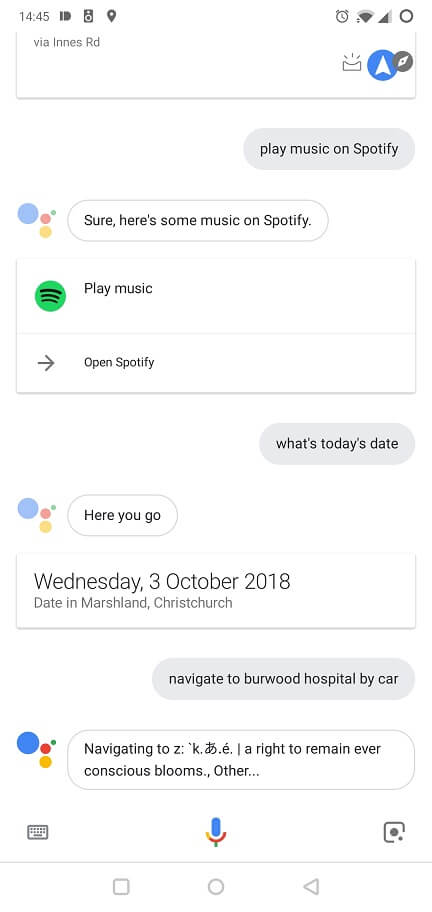
Error'd: A Right to Remain Ever Conscious Blooms

Eion R wrote, "Sure Google Voce, that is exactly what I was looking for."


"One might think this game is titled 'Alpha Blending and the Revenge of Floating Point' but it's not. It's just broken," writes Ashley A.


Bryan S. wrote, "I just hope that whoever created this survey doens't work on their online banking app."


"Now that it's the end of the day, I'm pretty sure I've walked some finite, non-negative number of steps," Drew C. writes.


"Why yes, I am interested in supporting the https project on Indiegogo. I think it'll be a big hit," writes Adam R.


"I guess I can't fault the hotel for trying to make some of its money back by including ads in their 'goodbye' note," wrote Andreas R.


[Advertisement] Forget logs. Next time you're struggling to replicate error, crash and performance issues in your apps - Think Raygun! Installs in minutes. Learn more.


To read the full article, please visit The Daily WTF
Manatees cause ripples when man “throws” water in river

Maria McCormick shot this video of an unusual occurrence as her husband Scott was tossing water from their boat into the overflowing St. John’s River in Volusia County, Florida. Manatee Viral Video

The post Manatees cause ripples when man “throws” water in river appeared first on Viral Viral Videos.


To read the full article, please visit Viral Viral Videos

Thursday, November 15, 2018

CodeSOD: Tryception

"If at first you don't succeed, try, try again."

We have all encountered situations where we need to attempt an operation, with full knowledge that the operation might very well fail. And if it does, we should retry it. Usually after a delay, usually with a maximum number of retries.

Today's anonymous submitter inherited a site-scraping application. Already, we're in dangerous territory- site-scraping is inherently fragile, dangerous code. It's more dangerous, of course, when it's written by the culprit behind this:

public void ScrapeASite() { try { //Some setup work var doc = HtmlWeb().Load(url); //a synchronous call //use the returned data to do stuff } catch(Exception e) { //recurse, and hope the next request for the same domain //gets a different host from the load balancer try { Console.WriteLine(DateTime.Now + " " + BAD SERVER!!! " + e.Message); } catch(Exception) { } //Rinse Repeat ScrapeASite(); } }
 

The Load method getting called is synchronous, which certainly makes this code simpler, even if it's probably not the best idea. If what goes wrong is a timeout, you might be waiting quite awhile as your program hangs.

And when something does go wrong, we handle the exception.

I'm first delighted to see that Console.WriteLine is wrapped in a try/catch. We can't be too careful, I suppose. We'll just swallow that exception, if it happens, and then we call ScrapeASite. Recursively.

This is C#. The .NET runtime does support tail call optimizations, but the compiled Intermediate Language needs to contain certain op-codes to enable it. The F# complier emits those op-codes. The C# compiler does not.

So if the site goes down, or the network is out, or what have you, we start sending request after request by piling frame after frame up on the call stack. The good news is that this method probably only uses a relatively small amount of space on the call stack, which means you can do this many many times before getting a StackOverflowException.

Perhaps the person responsible for this code should try, try, try a little harder to catch their own mistakes.

[Advertisement] BuildMaster allows you to create a self-service release management platform that allows different teams to manage their applications. Explore how!


To read the full article, please visit The Daily WTF

Wednesday, November 14, 2018

CodeSOD: A Profitable Education

Today’s anonymous submitter is an experienced Python developer. Their team is significantly less experienced. In the interests of training, someone suggested, “Perhaps we should buy books for everyone.” Our submitter was handed a stack of possible books, and asked to pick the best one to help the team mature.

One book spent some time discussing types, and the conversion between them. By way of example, it provided a handy method which would turn a string into a floating point number:

def str_int(s):
    val = "%.2f" % profit
    return float(val)

According to the book, this method turns a string into a float, which is why it’s called str_int.

"%.2f" % profit is one of several Python string formatting conventions, and it will take the contents of the variable profit and substitute them where the % appears in the string. In this case, it will be formatted as a floating point with two decimal places. Oh, but wait a moment, the .2f format token requires whatever is being substituted in actually be a floating point value, so the contents of profit couldn’t possibly be a string, or this would fail.

Which, of course, brings us to the largest problem with this code. profit is not the parameter passed in. The parameter passed in is s. s is not used in the method. profit is not declared anywhere in this scope, and according to our submitter, wasn’t declared in any scope.

What this method actually does is crash. What it means to do is take the contents of a floating point variable, truncate it to two decimal places, and then returns it as a float, after taking a round-trip through a string. Which is not the best way to do this in the first place, and it certainly isn’t even the simplest.

I suspect the variable names betray the author’s actual goal for the book: not education, no the respect of their peers, but simply put: profit. The errors in this volume mean that they can work up a second edition, which both corrects these and adds entirely new errors, to promote the third edition!

[Advertisement] Continuously monitor your servers for configuration changes, and report when there's configuration drift. Get started with Otter today!


To read the full article, please visit The Daily WTF