Friday, July 6, 2018

Error'd: Is Null News Good News?

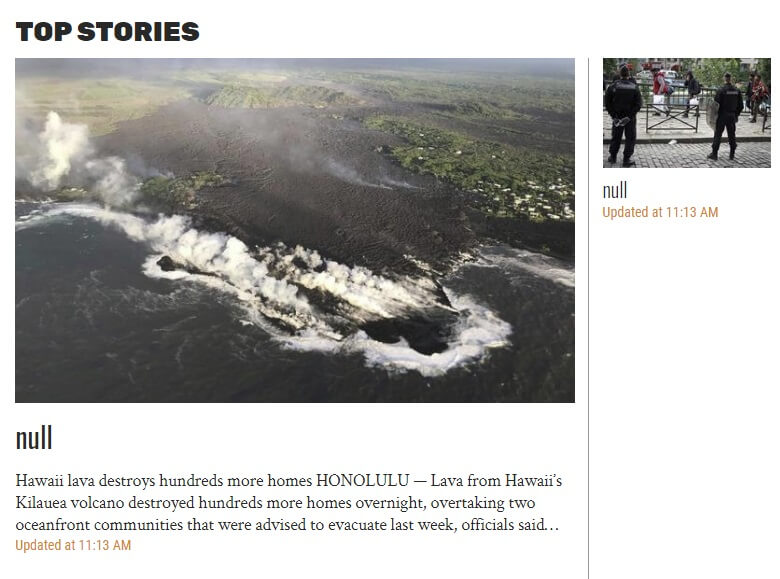
"The Eugene (Oregon) Register-Guard knows when it's a slow news day, null happens," Bill T. writes.


"12 months for free or a year for not free...so hard to choose!" writes Paige S.


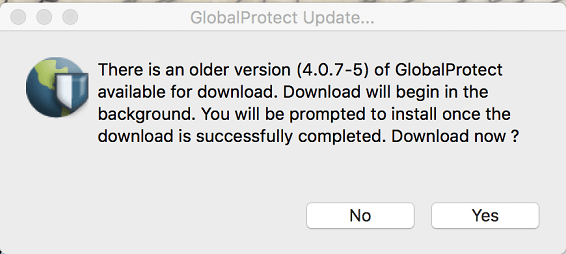
Rodrigo M. wrote, "GlobalProtect thinks the current version I have installed is not very good, so why not upgrade by downgrading?"


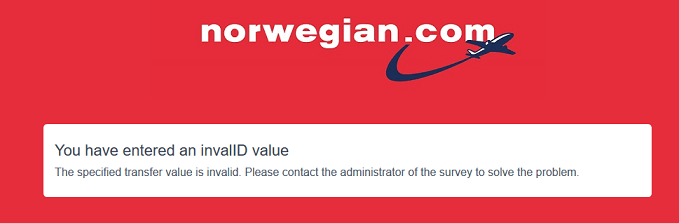
"After flying with Norwegian airways I got a mail asking to take the survey," Nathan K. wrote, "Now I apparently need to find out how to file a ticket with their sysadmins."


"So...my name is 'Marketing' now?" wrote Anon and totally not named Marketing.


Brad W. writes, "For having 'Caterpillar,' 'Revolver,' and 'Steel Toe' in the description the shoe seems a bit wimpy."


[Advertisement] ProGet supports your applications, Docker containers, and third-party packages, allowing you to enforce quality standards across all components. Download and see how!


To read the full article, please visit The Daily WTF

Thursday, July 5, 2018

CodeSOD: To Read or Parse

When JSON started to displace XML as the default data format for the web, my initial reaction was, "Oh, thank goodness." Time passed, and people reinvented schemas for JSON and RPC APIs in JSON and wrote tools which turn JSON schemas into UIs and built databases which store BSON, which is JSON with extra steps, and… it makes you wonder what it was all for.

Then people like Mark send in some code with a subject, "WHY??!??!". It's code which handles some XML, in C#.

Now, a useful fact- C# has a rich set of API- for handling XML, and like most XML APIs, they implement two approaches.

The simplest and most obvious is the DOM-style approach, where you load an entire XML document into memory and construct a DOM out of it. It's easy to manipulate, but for large XML documents can strain the available memory.

The other is the "reader" approach, where you treat the document as a stream, and read through the document, one element at a time. This is a bit trickier for developers, but scales better to large XML files.

So let's say that you're reading a multi-gigabyte XML file. You'd want to quit your job, obviously. But assuming you didn't, you'd want to use the "reader" approach, yes? There's just one problem: the reader approach requires you to go through the document element-by-element, and you can't skip around easily.


public void ReadXml(XmlReader reader) { string xml = reader.ReadOuterXml(); XElement element = XElement.Parse(xml); … }
 

Someone decided to give us the "best of both worlds". They load the multi-gigabyte file using a reader, but instead of going elementwise through the document, they use ReadOuterXml to pull the entire document in as a string. Once they have the multi-gigabyte string in memory, they then feed it into the XElement.Parse method, which turns the multi-gigabyte string into a multi-gigabyte DOM structure.

You'll be shocked to learn that this code was tested with small testing files, not multi-gigabyte files, worked fine in those conditions, and thus ended up in production.

[Advertisement] BuildMaster allows you to create a self-service release management platform that allows different teams to manage their applications. Explore how!


To read the full article, please visit The Daily WTF

Wednesday, July 4, 2018

Classic WTF: Common Sense Not Found

It's the Forth of July in the US, where we all take a day off and launch fireworks to celebrate the power of stack based languages. While we participate in American traditions, like eating hot dogs without buns, enjoy this classic WTF about a real 455hole. --Remy

Mike was a server admin at your typical everyday Initech. One day, project manager Bill stopped by his cube with questions from Jay, the developer of an internal Java application.

“Hello there- thanks for your time!” Bill dropped into Mike’s spare chair. “We needed your expertise on this one.”

“No problem,” Mike said, swiveling to face Bill. “What can I help with?”

Bill’s pen hovered over the yellow notepad in his lap. He frowned down at some notes already scribbled there. “The WAS HTTP server- that’s basically an Apache server, right?”

HTTP Error 455 - User is a Jackass

“Basically,” Mike answered. “Some IBM customizations, but yeah.”

“So it has a… HT Access file, or whatever it’s called?” Bill asked.

He meant .htaccess, the config file. “Sure, yeah.”

“OK.” Bill glanced up with wide-eyed innocence. “So we could put something into that file that would allow a redirect, right?”

“Um… it’s possible.” Uneasiness crept over Mike, who realized he was about to discuss a custom solution to a problem he didn’t know about, on a server he was responsible for. “What’s going on?”

“Well, Jay wants a redirect in there to send people to another server,” Bill replied.

Mike frowned in confusion. “We just stood this server up. Now he wants another domain?”

“Huh? Oh, no, It’s not our domain. It’s someone else’s.”

“OK… I’m lost,” Mike admitted. “Let’s start at the beginning. What’s the problem Jay wants to fix?”

“Well, he has this broken link in his app, and he wants to redirect people to the correct site,” Bill explained.

Mike stared, dumbfounded for several moments. “Excuse me?”

“Yeah. He has this link that points off to some external federal website- IRS, I think- and the link is broken. He wants to automatically redirect users to the correct site so they don’t get a 404 error. We started looking into it, and found that Apache has this HT Access file thingy. It looks like that’s what we need.”

“You’re kidding, right?” Mike blurted ahead of discretion.

“No. Why?” Bill’s eyes widened. “Something wrong?”

Mike swiveled around to retrieve his coffee mug, and a measure of composure. “Why doesn’t he just fix the link within the app so it points to the right URL?”

“Well, that’s what I asked him. But he thinks it’d be more convenient to redirect people.”

“If the link is updated, they won’t need to be redirected.”

“I realize that.”

Mike took a long swig. “That’s not what the .htaccess file is for. It’s meant to redirect an incoming request to a different server of your own, not someone else’s.”

“Oh.” Bill scribbled this down on his notepad, then stared hard at the scribbles. Every moment of silence ratcheted Mike’s nervousness higher.

“So you’re saying we can’t do the HT Access thing?” Bill finally asked, looking up again.

“To fix a broken link?”

“Yeah!” Bill’s eyes lit up. Apparently, Mike’s clarifying question had given him new hope.

“No.” Mike crushed that hope as mercilessly as he could.

“OK, so the HT Access thing won’t work. Hmm, OK.” Bill frowned back down at his notes, falling silent again. Mike sensed, and dreaded, another inane line of questioning about to follow.

“Well, another thing Jay mentioned was a custom error page,” Bill’s next foray began. “Can we do that in Apache?”

Mike hesitated. “…Yes?”

“Great! I’ll tell him that. He can develop a custom 404 page with some Javascript in it or something to redirect people to the correct site.”

“Huh?”

“Not the prettiest solution, I know, but Jay said he can make it work.”

Mike spoke slowly. “He’s going to create a custom 404 error page… for that broken link of his?”

“Yeah.”

“And that 404 page is supposed to display… when his broken link sends users off to some IRS web server?”

“Yeah.”

“The IRS web server, when it gets a request for a page that doesn’t exist, is gonna display Jay’s custom 404 error page. Is that what you’re telling me?”

Bill’s confidence faltered. “Um… I think so.”

Mike dropped the bomb. “How’s he gonna get that custom page onto their server?”

“Well, it’d be on our server.”

“Right! So how would that custom 404 error get displayed?”

“When the user clicks the broken link.”

“I asked how. You just answered when.”

“Well, OK, I don’t know! I’m not the developer here.” Bill’s hands rose defensively. “Jay said he could make it work.”

“He’s wrong!” Mike snapped.

“He was pretty confident.”

Mike hesitated a moment before his shoulders dropped. Facts and common sense were not to prevail that day. “OK then. Lemme know when it works.”

Bill perked up. “Really? You’ll put it on the server?”

“Sure. Just have him fill out a service request and I’ll deploy it.”

“Excellent! Thank you!” Bill jumped up with pleasant surprise, and left the cube.


A few days later, Mike was completely unsurprised to find Jay frowning into his cube. “My 404 page isn’t displaying!”

Mike created a new email addressed to Jay, then copied and pasted a link to the IRS Help and Resources page. “Sorry- you’ll have to take it up with the taxman.”

[Advertisement] Continuously monitor your servers for configuration changes, and report when there's configuration drift. Get started with Otter today!


To read the full article, please visit The Daily WTF
Tuesday, July 3, 2018

Flobble

The Inner Platform Effect, third only after booleans and dates, is one of the most complicated blunders that so-called developers (who think that they know what they're doing) do to Make Things Better.™ Combine that with multiple inheritance run-amok and a smartass junior developer who thinks documentation and method naming are good places to be cute, and you get todays' submission.

A cat attacking an impossible object illusion to get some tuna from their human

Chops,an experienced C++ developer somewhere in Europe, was working on their flagship product. It had been built slowly over 15 years by a core of 2-3 main developers, and an accompanying rotating cast of enthusiastic but inexperienced C++ developers. The principal developer had been one of those juniors himself at the start of development. When he finally left, an awful lot of knowledge walked out the door with him.

Enormous amounts of what should have been standard tools were homegrown. Homegrown reference counting was a particular bugbear, being thread dangerous as it was - memory leaks abounded. The whole thing ran across a network, and there were a half-dozen ways any one part could communicate with another. One such way was a "system event". A new message object was created and then just launched into the underlying messaging framework, in the hopes that it would magically get to whoever was interested, so long as that other party had registered an interest (not always the case).

A new system event was needed, and a trawl was made for anyone who knew anything about them. <Crickets> Nobody had any idea how they worked, or how to make a new one. The documentation was raked over, but it was found to mostly be people complaining that there was no documentation. The code suffered from inheritance fever. In a sensible system, there would be only one message type, and one would simply tag it appropriately with an identifier before inserting the data of interest.

In this system, there was an abstract base message type, and every specific message type had to inherit from it, implement some of the functions and override some others. Unfortunately, each time it seemed to be a different set of functions being implemented and a different set being overridden. Some were clearly cut and paste jobs, copying others, carrying their mistakes forward. Some were made out of several pieces of others; cut, paste and compiled until the warning messages were disabled compiler stopped complaining.

Sometimes, when developing abstract base types that were intended to be inherited from to create a concrete class for a new purpose, those early developers had created a simple, barebones concrete example implementation. A reference implementation, with "Example" in the name, that could be used as a starting point, with comments, making it clear what was necessary and what was optional. No such example class could be found for this.

Weeks of effort went into reverse-engineering the required messaging functionality, based on a few semi-related examples. Slowly, the shape of the mutant inside became apparent. Simple, do-nothing message objects were created and tested. Each time they failed, the logs were pored over, breakpoints were added, networks were watched, tracing the point of failure and learning something new.

Finally, the new message object was finished. It worked. There was still some voodoo coding in it; magic incantations that were not understood (the inheritance chain was more than five levels deep, with multiple diamonds, and one class being inherited from six times), but it worked, although nobody was certain why.

During the post development documentation phase, Mister Chops was hunting down every existing message object. Each would need reviewing and examination at some point, with the benefit of the very expensive reverse engineering. He came across one with an odd name; it wasn't used anywhere, so hadn't been touched since it was first committed. Nobody had ever had a reason to look at it. The prefix of the name was as expected, but the suffix - the part that told you at a glance what kind of message it was - was "Flobble". Chops opened it up.

It was a barebones example of a concrete implementation of the abstract base class, with useful explanatory comments on how to use/extend it, and how it worked. Back at the start, some developer, instead of naming the example class "Example" as was customary, or naming it anything at all that would have made it clear what it was, had named it "Flobble". It sat there for a decade, while people struggled to understand these objects over and over, and finally reverse engineered it at *significant* expense. Because some whimsical developer a decade previously had decided to be funny.

[Advertisement] Continuously monitor your servers for configuration changes, and report when there's configuration drift. Get started with Otter today!


To read the full article, please visit The Daily WTF

Monday, July 2, 2018

CodeSOD: An Eventful Career Continues

You may remember Sandra from her rather inglorious start at Initrovent. She didn't intend to continue working for Karl for very long, but she also didn't run out the door screaming. Perhaps she should have, but if she had- we wouldn't have this code.

Initrovent was an event-planning company, and thus needed to manage events, shows, and spaces. They wrote their own exotic suite of software to manage that task.

This code predates their current source control system, and thus it lacks any way to blame the person responsible. Karl, however, was happy to point out that he used to do Sandra's job, and he knew a thing or two about programming. "My fingerprints are on pretty much every line of code," he was proud to say.


if($showType == 'unassigned' || $showType == 'unassigned' || $showType == 'new') { ... }
 

For a taster, here's one that just leaves me puzzling. Were it a long list, I could more easily see how the same value might appear multiple times. A thirty line conditional would be more of a WTF, but I can at least understand it. There are only three options, two of them are duplicates, and they're right next to each other.

What if you wanted to conditionally enable debugging messages. Try this approach on for size.


foreach($current_open as $key => $value) { if ($value['HostOrganization']['ticket_reference'] == '400220') { //debug($value); } }
 

What a lovely use of magic numbers. I also like the mix of PascalCase and snake_case keys. But see, if there's any unfilled reservation for a ticket reference number of 400220, we'll print out a debugging message… if the debug statement isn't commented out, anyway.

With that in mind, let's think about a real-world problem. For a certain set of events, you don't want to send emails to the client. The planner wants to send those emails manually. Who knows why? It doesn't matter. This would be a trivial task, yes? Simply chuck a flag on the database table- manual_emails and add a code branch. You could do that, yes, but remember how we controlled the printing of debugging messages before. You know how they actually did this:


$hackSkipEventIds = array('55084514-0864-46b6-95aa-6748525ee4db'); if (in_array($eventId, $hackSkipEventIds)) { // Before we implement #<redacted>, we prefer to skip all roommate // notifications in certain events, and just let the planner send // manual emails. return; }
 

Look how extensible this solution is- if you ever need to disable emails for more events, you can just extend this array. There's no need to add a UI or anything!

[Advertisement] Utilize BuildMaster to release your software with confidence, at the pace your business demands. Download today!


To read the full article, please visit The Daily WTF